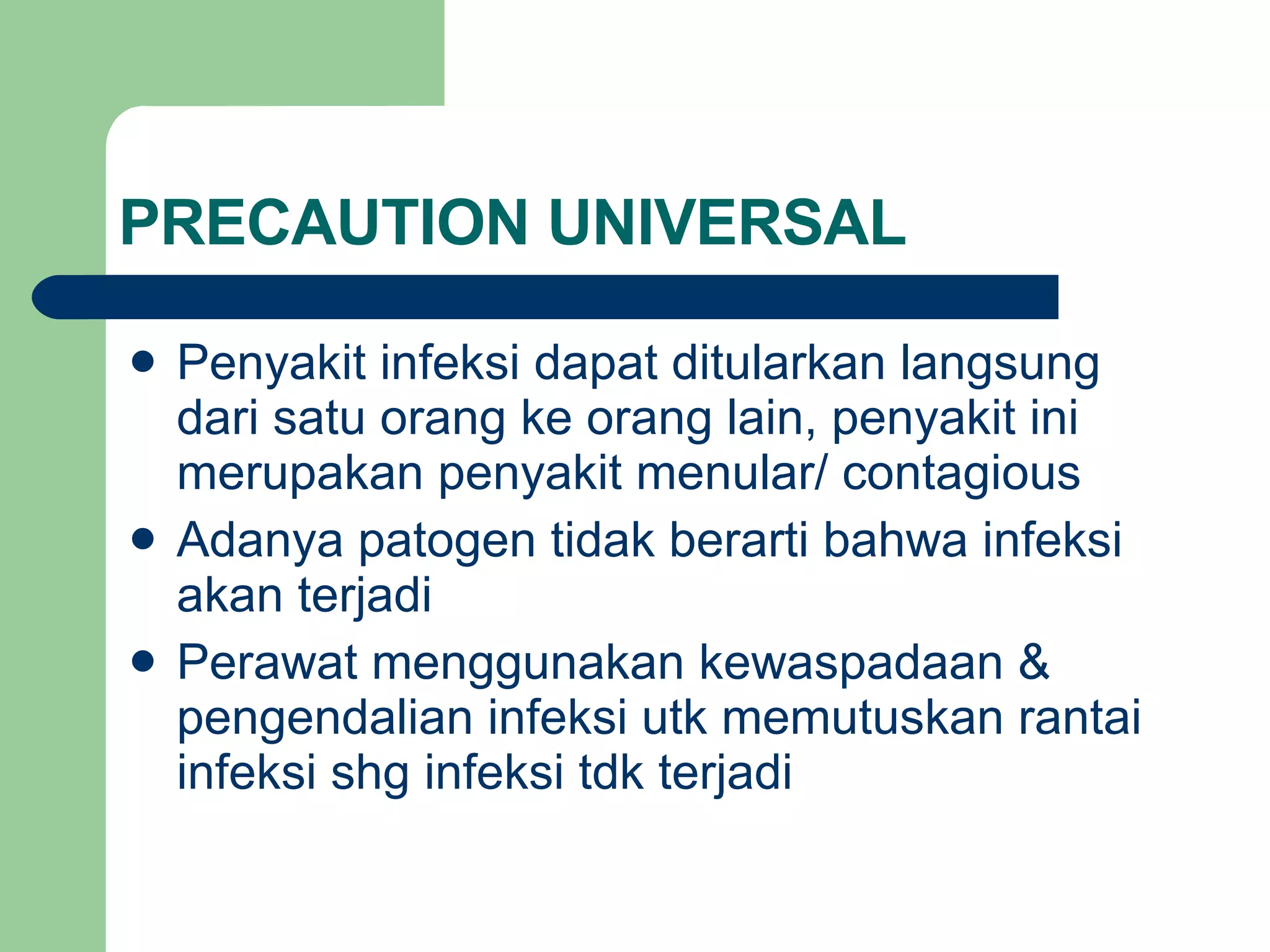

In the realm of healthcare, the concept of Universal Precautions is paramount. It serves as a cornerstone for infection control, ensuring the safety of both healthcare providers and patients. Universal Precautions are a set of guidelines designed to prevent the transmission of bloodborne pathogens, such as HIV, hepatitis B, and hepatitis C, during medical procedures. By treating all bodily fluids as potentially infectious, these precautions help create a safer healthcare environment.
Understanding Universal Precautions
Universal Precautions were first introduced by the Centers for Disease Control and Prevention (CDC) in 1985. The primary goal was to protect healthcare workers from exposure to bloodborne pathogens. Over the years, these guidelines have evolved to include more comprehensive infection control measures. The key principles of Universal Precautions include:
- Treating all bodily fluids as potentially infectious.
- Using personal protective equipment (PPE) such as gloves, gowns, and masks.
- Proper disposal of contaminated materials.
- Hand hygiene practices before and after patient contact.
- Safe handling and disposal of sharps (needles, scalpels, etc.).
Explain Universal Precautions: Key Components
To explain Universal Precautions effectively, it is essential to understand their key components. These components are designed to minimize the risk of infection transmission in healthcare settings.
Personal Protective Equipment (PPE)
PPE is crucial in preventing the spread of infections. Healthcare workers should use appropriate PPE based on the level of risk involved in the procedure. Common types of PPE include:
- Gloves: To protect hands from direct contact with bodily fluids.
- Gowns: To protect clothing and skin from splashes and sprays of bodily fluids.
- Masks and eye protection: To protect the mucous membranes of the eyes, nose, and mouth from splashes and sprays.
- Face shields: To provide additional protection for the face.
Hand Hygiene
Hand hygiene is one of the most effective ways to prevent the spread of infections. Healthcare workers should perform hand hygiene:
- Before and after patient contact.
- Before putting on gloves.
- After removing gloves.
- After contact with bodily fluids.
Hand hygiene can be performed using either soap and water or an alcohol-based hand sanitizer. The choice depends on the availability of resources and the level of contamination.
Safe Handling and Disposal of Sharps
Sharps, such as needles and scalpels, pose a significant risk of injury and infection. Proper handling and disposal of sharps are essential to prevent needlestick injuries and the transmission of bloodborne pathogens. Healthcare workers should:
- Use safety-engineered sharps devices whenever possible.
- Dispose of used sharps in puncture-resistant containers.
- Avoid recapping needles and dispose of them immediately after use.
Proper Disposal of Contaminated Materials
Contaminated materials, such as gloves, gowns, and other PPE, should be disposed of in designated biohazard containers. These containers should be clearly labeled and handled according to local regulations. Proper disposal helps prevent the spread of infections and ensures a safe environment for both healthcare workers and patients.
Implementing Universal Precautions in Healthcare Settings
Implementing Universal Precautions in healthcare settings requires a comprehensive approach that involves education, training, and adherence to guidelines. Healthcare facilities should:
- Provide regular training on infection control practices for all staff.
- Ensure the availability of necessary PPE and other infection control supplies.
- Establish protocols for the safe handling and disposal of sharps and contaminated materials.
- Promote a culture of safety and infection control awareness.
By following these steps, healthcare facilities can create a safer environment for both patients and healthcare workers.
Challenges and Solutions in Implementing Universal Precautions
While Universal Precautions are essential for infection control, implementing them can present challenges. Some common challenges include:
- Lack of adherence to guidelines due to lack of knowledge or complacency.
- Inadequate supply of PPE and other infection control supplies.
- Insufficient training and education on infection control practices.
- High workload and time constraints that may lead to shortcuts in infection control procedures.
To overcome these challenges, healthcare facilities should:
- Provide ongoing education and training on infection control practices.
- Ensure the availability of necessary supplies and equipment.
- Promote a culture of safety and adherence to guidelines.
- Implement policies that support infection control practices, such as adequate staffing and time management.
Universal Precautions vs. Standard Precautions
It is important to distinguish between Universal Precautions and Standard Precautions. While Universal Precautions focus specifically on bloodborne pathogens, Standard Precautions are a broader set of guidelines that apply to all bodily fluids and secretions. Standard Precautions include:
- Hand hygiene.
- Use of PPE.
- Safe handling and disposal of sharps.
- Proper disposal of contaminated materials.
- Respiratory hygiene and cough etiquette.
- Environmental cleaning and disinfection.
Standard Precautions are designed to protect healthcare workers from a wide range of infections, including those transmitted through airborne, droplet, and contact routes.
📝 Note: While Universal Precautions and Standard Precautions share many similarities, Standard Precautions provide a more comprehensive approach to infection control by addressing a broader range of pathogens and transmission routes.
Case Studies: Success Stories in Implementing Universal Precautions
Several healthcare facilities have successfully implemented Universal Precautions, resulting in significant reductions in infection rates. Here are a few examples:
| Facility | Intervention | Outcome |
|---|---|---|
| Hospital A | Implemented a comprehensive training program on infection control practices. | Reduced needlestick injuries by 50% and bloodborne pathogen infections by 30%. |
| Clinic B | Provided adequate supplies of PPE and established protocols for safe handling and disposal of sharps. | Eliminated needlestick injuries and reduced bloodborne pathogen infections by 40%. |
| Nursing Home C | Promoted a culture of safety and adherence to infection control guidelines. | Reduced infection rates by 25% and improved overall patient outcomes. |
These case studies demonstrate the effectiveness of Universal Precautions in preventing the transmission of infections in healthcare settings.
Future Directions in Infection Control
As our understanding of infectious diseases continues to evolve, so too must our infection control practices. Future directions in infection control may include:
- Development of new technologies for infection prevention, such as advanced PPE and disinfection methods.
- Enhanced training and education programs for healthcare workers.
- Improved surveillance and monitoring systems for early detection and control of outbreaks.
- Increased focus on antimicrobial stewardship to prevent the spread of antibiotic-resistant infections.
By staying ahead of emerging threats and continuously improving our infection control practices, we can create a safer healthcare environment for everyone.
In conclusion, Universal Precautions play a crucial role in preventing the transmission of infections in healthcare settings. By treating all bodily fluids as potentially infectious and adhering to guidelines for infection control, healthcare workers can protect themselves and their patients from a wide range of pathogens. Through education, training, and adherence to guidelines, healthcare facilities can create a safer environment for everyone. The future of infection control holds promise with advancements in technology and continued efforts to improve practices, ensuring that healthcare remains a safe and effective endeavor for all involved.
Related Terms:
- what does universal precautions mean
- example of a universal precaution
- universal precaution definition and examples
- examples of universal precautions
- universal precautions vs standard
- list of universal precautions