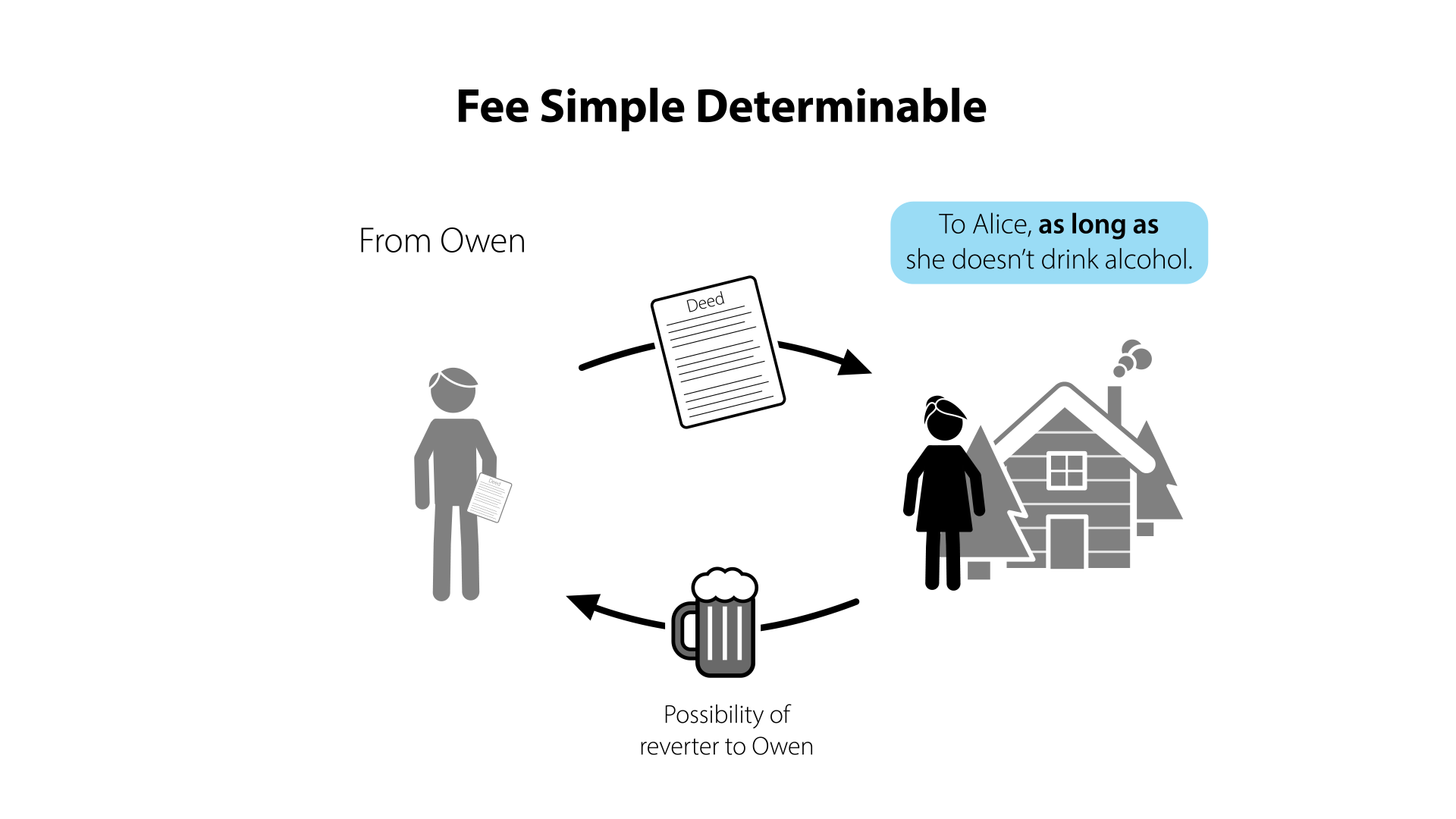

Understanding the intricacies of property ownership is crucial for anyone involved in real estate. One of the most fundamental concepts in this realm is the Fee Simple Determinable estate. This type of ownership grants the owner a complete interest in the property, but with a specific condition that, if violated, can result in the automatic termination of the ownership. This blog post will delve into the details of Fee Simple Determinable, its characteristics, and how it differs from other types of property ownership.
What is a Fee Simple Determinable?
A Fee Simple Determinable is a type of freehold estate in real property where the owner has the right to possess and use the property indefinitely, as long as a specified condition is met. If the condition is violated, the property automatically reverts to the grantor or a designated third party. This type of ownership is often used in situations where the grantor wants to ensure that the property is used for a specific purpose or in a particular manner.
Characteristics of Fee Simple Determinable
To better understand Fee Simple Determinable, let's explore its key characteristics:
- Conditional Ownership: The ownership is conditional upon the fulfillment of a specific condition. If the condition is not met, the property reverts to the grantor or a designated third party.
- Automatic Reversion: Unlike other types of conditional ownership, the reversion in a Fee Simple Determinable estate is automatic and does not require legal action.
- Indefinite Duration: As long as the condition is met, the owner can possess and use the property indefinitely.
- Transferable: The owner can transfer the property to another party, but the new owner is also subject to the same condition.
Examples of Fee Simple Determinable
To illustrate how Fee Simple Determinable works, consider the following examples:
- Educational Use: A property is granted to a school with the condition that it must be used for educational purposes. If the school stops using the property for education, it automatically reverts to the grantor.
- Environmental Conservation: A landowner grants a parcel of land to a conservation organization with the condition that it must be maintained as a nature reserve. If the organization fails to uphold this condition, the land reverts to the original owner.
- Residential Use: A property is granted to a family with the condition that it must be used as a single-family residence. If the family converts the property into a commercial building, it automatically reverts to the grantor.
Fee Simple Determinable vs. Fee Simple Subject to Condition Subsequent
It's essential to distinguish between Fee Simple Determinable and Fee Simple Subject to Condition Subsequent. While both types of ownership involve conditions, the key difference lies in how the reversion occurs:
- Fee Simple Determinable: The reversion is automatic upon the violation of the condition. No legal action is required.
- Fee Simple Subject to Condition Subsequent: The reversion requires legal action. The grantor must take steps to enforce the condition and reclaim the property.
Here is a comparison table to highlight the differences:
| Aspect | Fee Simple Determinable | Fee Simple Subject to Condition Subsequent |
|---|---|---|
| Reversion | Automatic upon violation of condition | Requires legal action |
| Condition | Must be met for ownership to continue | Must be enforced by the grantor |
| Ownership Duration | Indefinite as long as condition is met | Indefinite, but subject to enforcement |
📝 Note: The choice between Fee Simple Determinable and Fee Simple Subject to Condition Subsequent depends on the grantor's preferences and the specific conditions they want to impose.
Legal Implications of Fee Simple Determinable
Understanding the legal implications of a Fee Simple Determinable estate is crucial for both the grantor and the grantee. Here are some key points to consider:
- Condition Clarity: The condition must be clearly stated in the deed to avoid any ambiguity. Vague or unclear conditions can lead to legal disputes.
- Enforcement: Since the reversion is automatic, there is no need for legal enforcement. However, the grantor or designated third party should monitor the property to ensure the condition is met.
- Transferability: The owner can transfer the property, but the new owner is bound by the same condition. It's essential to disclose this condition to potential buyers.
- Tax Implications: The tax implications of a Fee Simple Determinable estate can vary. It's advisable to consult with a tax professional to understand the specific tax consequences.
Advantages and Disadvantages of Fee Simple Determinable
Like any form of property ownership, Fee Simple Determinable has its advantages and disadvantages. Here are some key points to consider:
Advantages
- Control Over Use: The grantor retains control over how the property is used, ensuring it aligns with their intentions.
- Automatic Reversion: The automatic reversion feature simplifies the process of reclaiming the property if the condition is violated.
- Flexibility: The condition can be tailored to meet specific needs, making it a versatile option for various situations.
Disadvantages
- Limited Ownership: The owner's rights are limited by the condition, which can be restrictive.
- Potential for Disputes: Ambiguous conditions can lead to legal disputes, making it essential to draft clear and precise terms.
- Monitoring Requirements: The grantor or designated third party must monitor the property to ensure the condition is met, which can be time-consuming.
📝 Note: It's crucial to weigh the advantages and disadvantages carefully before choosing a Fee Simple Determinable estate. Consulting with a real estate attorney can provide valuable insights and guidance.
Conclusion
In summary, a Fee Simple Determinable estate offers a unique form of property ownership that grants the owner complete control over the property as long as a specific condition is met. This type of ownership is particularly useful in situations where the grantor wants to ensure the property is used for a specific purpose. Understanding the characteristics, legal implications, and differences from other types of ownership is essential for making informed decisions. Whether you are a grantor or a grantee, being aware of the advantages and disadvantages can help you navigate the complexities of Fee Simple Determinable estates effectively.
Related Terms:
- fee simple defeasible
- defeasible estate
- fee simple determinable example
- fee simple conditional
- fee simple determinable vs defeasible
- fee simple absolute