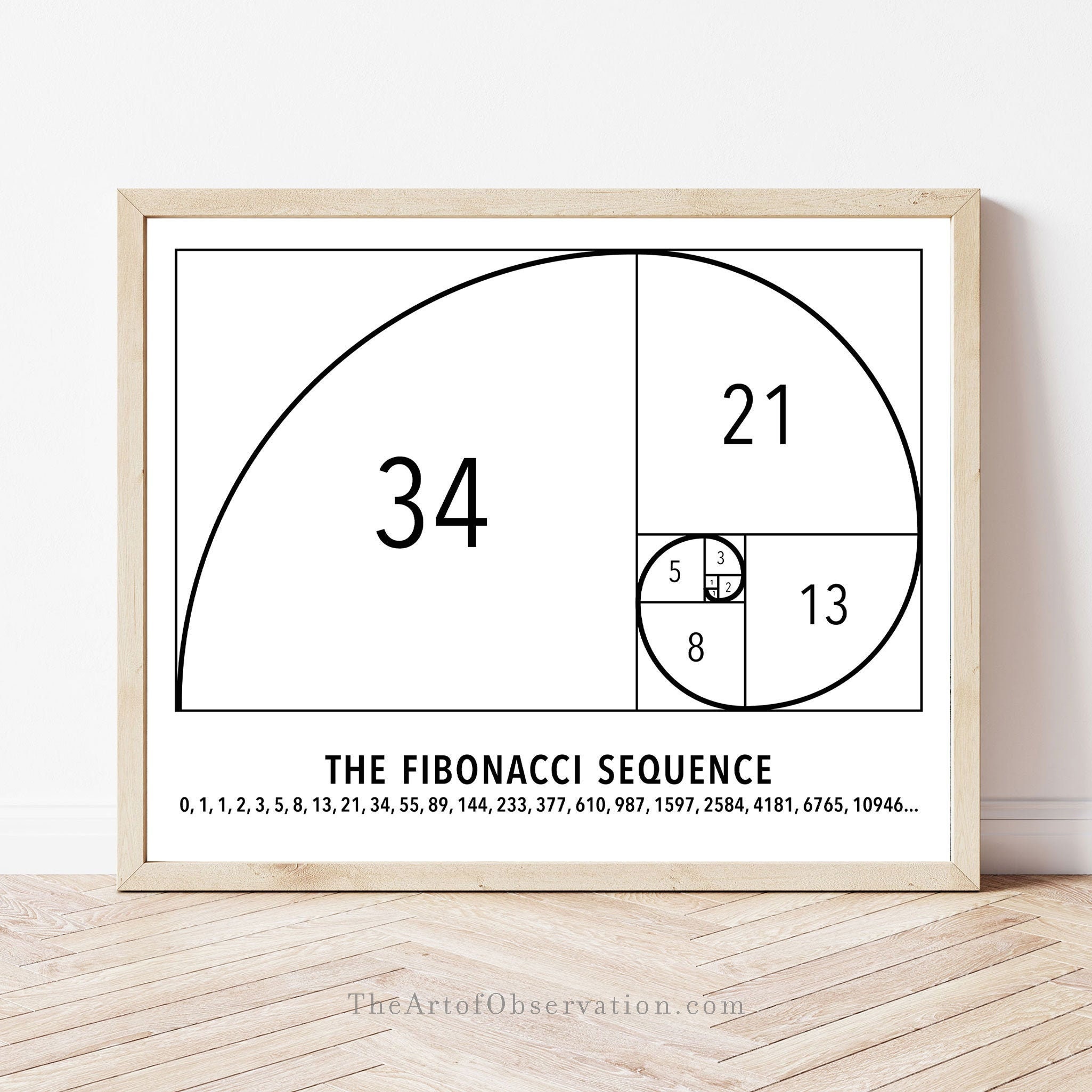

The world of art and mathematics often intersect in fascinating ways, creating unique and visually stunning pieces that blend the precision of numbers with the creativity of artistic expression. One such intersection is the creation of Fibonacci Sequence Art, which uses the mathematical sequence to generate beautiful and intricate designs. The Fibonacci Sequence, named after the Italian mathematician Leonardo Fibonacci, is a series of numbers where each number is the sum of the two preceding ones, typically starting with 0 and 1. This sequence has been found in various natural phenomena, from the branching of trees to the arrangement of leaves on a stem, making it a rich source of inspiration for artists.
Understanding the Fibonacci Sequence
The Fibonacci Sequence is a simple yet profound mathematical concept. The sequence begins with 0 and 1, and each subsequent number is the sum of the two preceding numbers. The sequence goes as follows: 0, 1, 1, 2, 3, 5, 8, 13, 21, 34, and so on. This sequence has been observed in various natural patterns, such as the arrangement of seeds in a sunflower, the branching of veins in leaves, and the family tree of honeybees. The ratio of consecutive Fibonacci numbers approaches the golden ratio, approximately 1.618, which is often considered aesthetically pleasing.
The Golden Ratio and Fibonacci Sequence Art
The golden ratio, often denoted by the Greek letter phi (φ), is closely related to the Fibonacci Sequence. As the numbers in the sequence get larger, the ratio of consecutive Fibonacci numbers gets closer to the golden ratio. This ratio has been used in art and architecture for centuries, as it is believed to create harmonious and balanced compositions. In Fibonacci Sequence Art, artists often use the golden ratio to determine the proportions of their designs, creating visually appealing and mathematically precise pieces.
Creating Fibonacci Sequence Art
Creating Fibonacci Sequence Art can be a rewarding and educational experience. Here are some steps and techniques to help you get started:
Materials Needed
- Paper or canvas
- Pencils and erasers
- Ruler or straight edge
- Compass (optional)
- Colored pencils, markers, or paints
Step-by-Step Guide
1. Choose a Starting Point: Begin by deciding on the size of your artwork and the starting Fibonacci numbers. For simplicity, you can start with the first few numbers in the sequence: 0, 1, 1, 2, 3, 5, 8, 13, etc.
2. Draw the Initial Shapes: Use a ruler to draw straight lines or a compass to draw circles based on the Fibonacci numbers. For example, you can draw a series of squares where the side lengths correspond to the Fibonacci numbers.
3. Create a Spiral: One of the most iconic Fibonacci Sequence Art designs is the Fibonacci spiral. To create this, draw a series of squares with side lengths corresponding to the Fibonacci numbers. Then, draw quarter-circle arcs connecting the opposite corners of the squares. The resulting spiral will approximate the golden spiral, which is closely related to the Fibonacci Sequence.
4. Add Details and Colors: Once you have the basic structure of your artwork, you can add details and colors to enhance its visual appeal. Use colored pencils, markers, or paints to fill in the shapes and create a cohesive design.
5. Experiment with Variations: There are many variations of Fibonacci Sequence Art that you can explore. For example, you can create a Fibonacci tree by drawing branches that follow the Fibonacci Sequence, or you can create a Fibonacci grid by arranging squares in a grid pattern based on the sequence.
💡 Note: When creating Fibonacci Sequence Art, it's important to be patient and precise. The beauty of this art form lies in its mathematical accuracy, so take your time to ensure that your measurements and proportions are correct.
Examples of Fibonacci Sequence Art
Fibonacci Sequence Art can take many forms, from simple geometric designs to complex and intricate patterns. Here are a few examples to inspire your own creations:
Fibonacci Spiral
The Fibonacci spiral is one of the most well-known examples of Fibonacci Sequence Art. It is created by drawing a series of squares with side lengths corresponding to the Fibonacci numbers and then connecting the opposite corners with quarter-circle arcs. The resulting spiral is a beautiful and mathematically precise design that can be used in various artworks.
Fibonacci Tree
A Fibonacci tree is a branching structure where the number of branches at each level follows the Fibonacci Sequence. This design can be created by drawing a series of lines that branch out in a pattern based on the sequence. The resulting tree has a natural and organic appearance, reflecting the way that branches grow in nature.
Fibonacci Grid
A Fibonacci grid is a pattern of squares arranged in a grid based on the Fibonacci numbers. Each square’s side length corresponds to a number in the sequence, creating a visually appealing and mathematically precise design. This grid can be used as a background for other artwork or as a standalone piece.
Applications of Fibonacci Sequence Art
Fibonacci Sequence Art has a wide range of applications, from decorative pieces to educational tools. Here are a few ways that this art form can be used:
Decorative Art
Fibonacci Sequence Art can be used to create beautiful and unique decorative pieces for the home or office. The mathematical precision and natural patterns of this art form make it a popular choice for wall art, prints, and other decorative items.
Educational Tool
Fibonacci Sequence Art is an excellent educational tool for teaching mathematics and art. By creating Fibonacci Sequence Art, students can learn about the Fibonacci Sequence, the golden ratio, and the relationship between mathematics and art. This hands-on approach to learning can make complex concepts more accessible and engaging.
Digital Art and Design
Fibonacci Sequence Art can also be used in digital art and design. Graphic designers and digital artists often use the Fibonacci Sequence and the golden ratio to create balanced and harmonious compositions. This art form can be incorporated into logos, web design, and other digital media to create visually appealing and mathematically precise designs.
Inspiration from Nature
One of the most fascinating aspects of Fibonacci Sequence Art is its connection to nature. The Fibonacci Sequence can be found in various natural phenomena, from the arrangement of leaves on a stem to the branching of trees. By studying these natural patterns, artists can gain inspiration for their own creations and create artwork that reflects the beauty and complexity of the natural world.
For example, the arrangement of seeds in a sunflower follows the Fibonacci Sequence, creating a spiral pattern that allows for efficient packing of the seeds. Similarly, the branching of veins in leaves and the family tree of honeybees follow the Fibonacci Sequence, reflecting the mathematical principles that underlie natural growth and development.
By incorporating these natural patterns into their artwork, artists can create pieces that are not only visually appealing but also scientifically accurate. This intersection of art and science makes Fibonacci Sequence Art a unique and rewarding form of creative expression.
In addition to the Fibonacci Sequence, the golden ratio is also prevalent in nature. The ratio of the length to the width of a nautilus shell, for example, is approximately 1.618, the same as the golden ratio. This ratio can be found in the proportions of many natural objects, from the shape of a leaf to the structure of a crystal.
By studying these natural patterns and incorporating them into their artwork, artists can create pieces that are both beautiful and scientifically significant. This intersection of art and science makes Fibonacci Sequence Art a unique and rewarding form of creative expression.
Conclusion
Fibonacci Sequence Art is a fascinating and rewarding form of creative expression that blends the precision of mathematics with the beauty of artistic design. By using the Fibonacci Sequence and the golden ratio, artists can create visually appealing and mathematically precise pieces that reflect the natural patterns found in the world around us. Whether used as decorative art, educational tools, or digital design elements, Fibonacci Sequence Art offers a unique and engaging way to explore the intersection of art and mathematics. The next time you create a piece of art or appreciate a natural pattern, consider the beauty and complexity of the Fibonacci Sequence and the golden ratio, and let them inspire your own creative endeavors.
Related Terms:
- fibonacci sequence art for kids
- artists that use fibonacci sequence
- fibonacci sequence art lesson
- fibonacci sequence art project
- fibonacci sequence in real life
- fibonacci sequence math