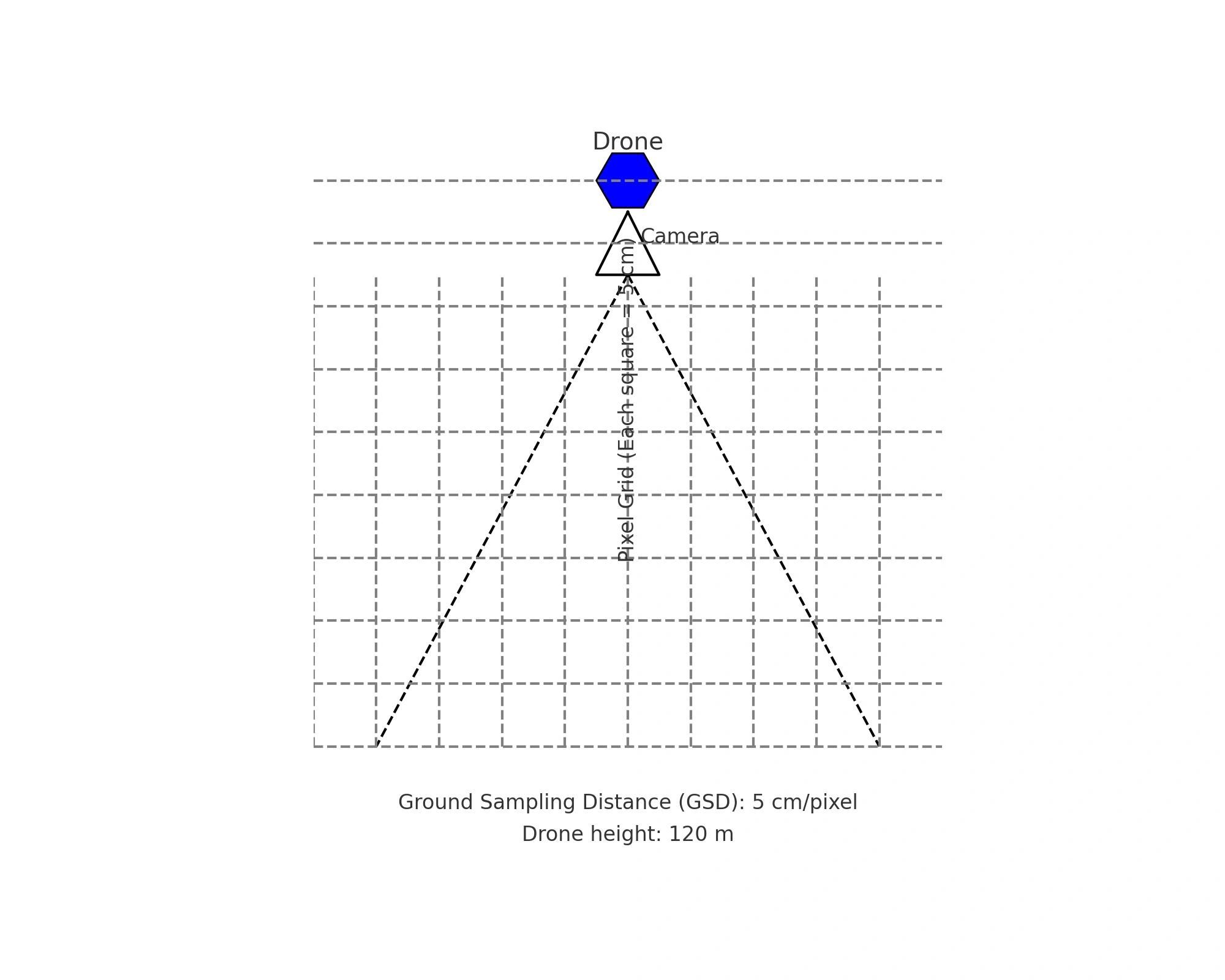

In the realm of remote sensing and geospatial analysis, the concept of Ground Sample Distance (GSD) is fundamental. GSD refers to the distance between pixel centers measured on the ground. It is a critical parameter that determines the spatial resolution of an image, influencing how much detail can be discerned from aerial or satellite imagery. Understanding GSD is essential for various applications, including environmental monitoring, urban planning, and agricultural management.
Understanding Ground Sample Distance
Ground Sample Distance (GSD) is a measure of the spatial resolution of an image. It indicates the size of the area on the ground that corresponds to a single pixel in the image. For instance, a GSD of 1 meter means that each pixel in the image represents a 1-meter by 1-meter area on the ground. This metric is crucial for determining the level of detail that can be captured and analyzed from remote sensing data.
GSD is influenced by several factors, including the altitude of the sensor, the focal length of the camera, and the size of the sensor's pixels. Higher altitudes generally result in larger GSD values, meaning lower spatial resolution. Conversely, lower altitudes and smaller pixel sizes can yield higher spatial resolution, providing more detailed imagery.
Importance of Ground Sample Distance in Remote Sensing
The importance of GSD in remote sensing cannot be overstated. It directly affects the quality and utility of the data collected. Here are some key reasons why GSD is crucial:
- Detail Resolution: A smaller GSD means higher spatial resolution, allowing for the detection of finer details. This is particularly important in applications like urban planning, where precise measurements of buildings and infrastructure are necessary.
- Accuracy in Analysis: Higher resolution images enable more accurate analysis and interpretation. For example, in agricultural monitoring, a smaller GSD can help in identifying individual plants or detecting early signs of disease.
- Cost-Effectiveness: Understanding GSD helps in selecting the appropriate sensor and platform for a given application, balancing cost and resolution requirements. For instance, satellite imagery with a larger GSD might be sufficient for broad-scale environmental monitoring, reducing costs compared to high-resolution aerial photography.
Calculating Ground Sample Distance
Calculating GSD involves understanding the relationship between the sensor's altitude, focal length, and pixel size. The formula for GSD is:
GSD = (Altitude * Pixel Size) / Focal Length
Where:
- Altitude: The height of the sensor above the ground.
- Pixel Size: The physical size of a single pixel on the sensor.
- Focal Length: The distance between the lens and the sensor.
For example, if a sensor is flying at an altitude of 1,000 meters with a pixel size of 0.005 meters and a focal length of 50 millimeters, the GSD would be calculated as follows:
GSD = (1,000 * 0.005) / 50 = 0.1 meters
This means each pixel in the image represents a 0.1-meter by 0.1-meter area on the ground.
📝 Note: The accuracy of GSD calculations depends on precise measurements of altitude, pixel size, and focal length. Any errors in these measurements can affect the overall accuracy of the GSD.
Applications of Ground Sample Distance
GSD is applied in various fields where high-resolution imagery is essential. Some of the key applications include:
- Environmental Monitoring: GSD helps in monitoring changes in land use, deforestation, and water bodies. High-resolution images allow for detailed analysis of environmental changes over time.
- Urban Planning: In urban areas, GSD is used to map infrastructure, monitor urban growth, and plan for future developments. High-resolution imagery provides detailed information about buildings, roads, and other urban features.
- Agricultural Management: Farmers and agricultural scientists use GSD to monitor crop health, detect pests and diseases, and optimize irrigation. High-resolution images help in identifying individual plants and assessing their condition.
- Disaster Management: During natural disasters, GSD is crucial for assessing damage and planning relief efforts. High-resolution imagery provides detailed information about affected areas, helping in the deployment of resources and rescue operations.
Factors Affecting Ground Sample Distance
Several factors can affect the GSD of an image. Understanding these factors is essential for optimizing the spatial resolution of remote sensing data. Some of the key factors include:
- Altitude: The height of the sensor above the ground significantly affects GSD. Higher altitudes result in larger GSD values, reducing spatial resolution.
- Pixel Size: The physical size of the sensor's pixels influences GSD. Smaller pixel sizes generally result in higher spatial resolution, providing more detailed imagery.
- Focal Length: The focal length of the camera affects the field of view and, consequently, the GSD. Longer focal lengths can result in smaller GSD values, enhancing spatial resolution.
- Sensor Type: Different sensors have varying pixel sizes and resolutions. Choosing the appropriate sensor for a given application is crucial for achieving the desired GSD.
Optimizing Ground Sample Distance
Optimizing GSD involves selecting the right sensor, platform, and flight parameters to achieve the desired spatial resolution. Here are some strategies for optimizing GSD:
- Selecting the Right Sensor: Choose a sensor with a pixel size that matches the required GSD. For high-resolution applications, sensors with smaller pixel sizes are preferable.
- Adjusting Altitude: Fly the sensor at an appropriate altitude to achieve the desired GSD. Lower altitudes generally result in smaller GSD values, providing higher spatial resolution.
- Using High-Quality Lenses: High-quality lenses with appropriate focal lengths can enhance spatial resolution. Longer focal lengths can result in smaller GSD values, improving image detail.
- Post-Processing Techniques: Techniques like image sharpening and super-resolution can enhance the spatial resolution of images. These methods can help in achieving a smaller effective GSD.
📝 Note: Optimizing GSD requires a balance between spatial resolution and other factors like cost and data volume. It is essential to consider the specific requirements of the application and choose the appropriate parameters accordingly.
Challenges in Ground Sample Distance
While GSD is a critical parameter in remote sensing, it also presents several challenges. Some of the key challenges include:
- Data Volume: High-resolution images with smaller GSD values result in larger data volumes. Managing and processing these large datasets can be challenging and resource-intensive.
- Cost: Achieving high spatial resolution often requires expensive sensors and platforms. Balancing cost and resolution is a significant challenge in many applications.
- Atmospheric Conditions: Atmospheric conditions like haze, clouds, and turbulence can affect image quality and GSD. Ensuring clear and stable conditions is crucial for obtaining high-quality imagery.
- Sensor Calibration: Accurate calibration of the sensor is essential for achieving the desired GSD. Any errors in calibration can affect the overall accuracy of the spatial resolution.
Future Trends in Ground Sample Distance
The field of remote sensing is continually evolving, with advancements in technology and methodologies. Some of the future trends in GSD include:
- High-Resolution Sensors: The development of high-resolution sensors with smaller pixel sizes is expected to enhance spatial resolution, providing more detailed imagery.
- Advanced Platforms: The use of drones, satellites, and other advanced platforms is expanding, offering greater flexibility and precision in data collection.
- Artificial Intelligence and Machine Learning: AI and machine learning techniques are being integrated into remote sensing to enhance image processing and analysis. These technologies can help in achieving higher effective GSD through techniques like super-resolution.
- Integration with Other Data Sources: Combining remote sensing data with other data sources, such as LiDAR and ground-based measurements, can provide a more comprehensive understanding of the environment, enhancing the utility of GSD.
In conclusion, Ground Sample Distance (GSD) is a fundamental concept in remote sensing that determines the spatial resolution of imagery. Understanding and optimizing GSD is crucial for various applications, including environmental monitoring, urban planning, and agricultural management. By selecting the right sensor, adjusting flight parameters, and employing advanced techniques, it is possible to achieve the desired spatial resolution and enhance the utility of remote sensing data. As technology continues to advance, the future of GSD holds promise for even higher resolution and more detailed imagery, enabling more accurate and comprehensive analysis of the environment.
Related Terms:
- ground sample distance equation
- ground sampling distance
- ground distance formula
- ground sample distance vs resolution
- how to calculate ground distance
- ground sample distance calculator