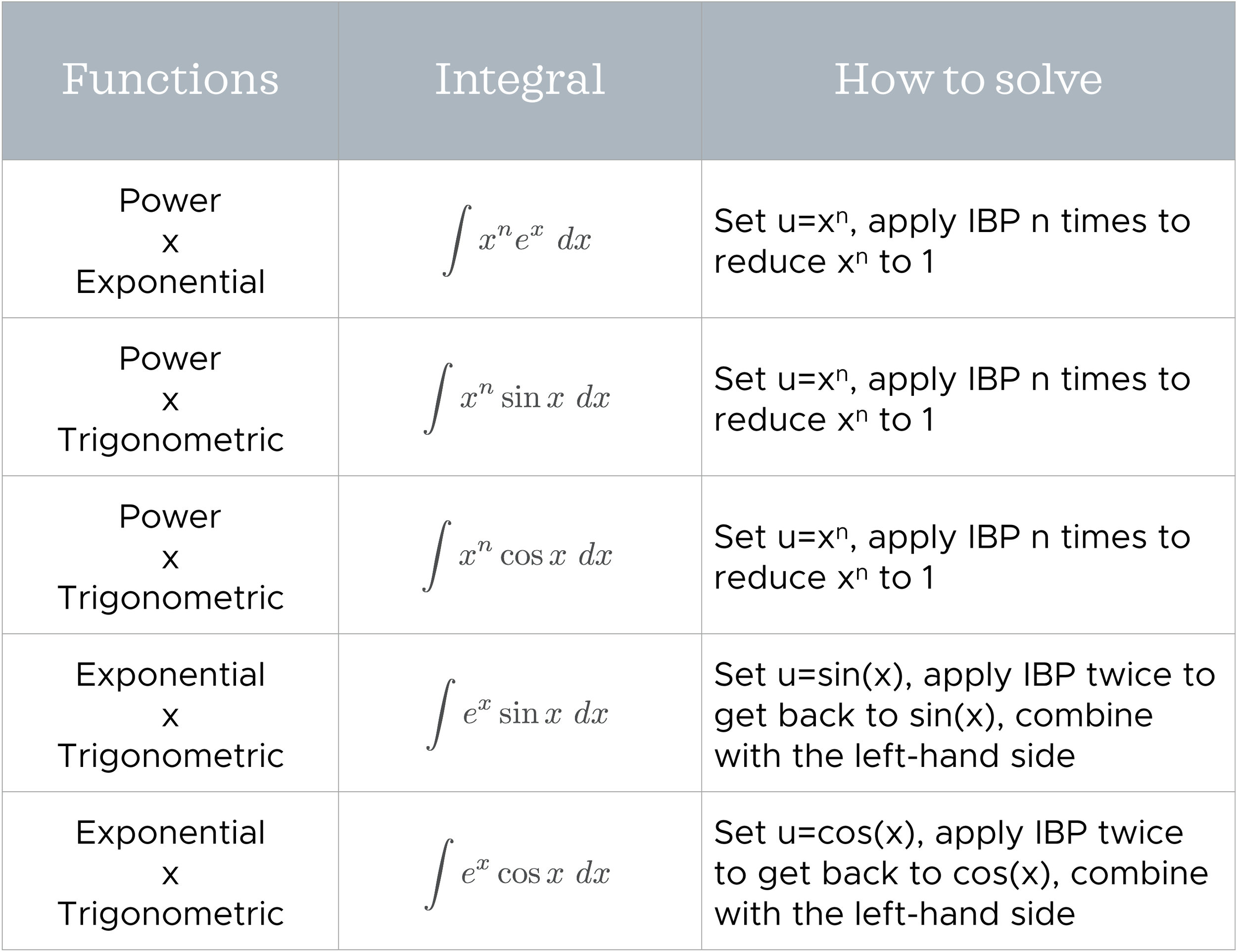

In the realm of mathematics, exponential functions play a crucial role in modeling various phenomena, from population growth to radioactive decay. However, when it comes to integration exponential functions, the process can become quite intricate. This blog post aims to demystify the integration of exponential functions, providing a comprehensive guide that covers the basics, advanced techniques, and practical applications.
Understanding Exponential Functions
Exponential functions are of the form f(x) = a^x, where a is a constant and x is the variable. The constant a determines the rate of growth or decay. For example, if a > 1, the function grows exponentially, while if 0 < a < 1, the function decays exponentially.
Exponential functions are ubiquitous in various fields, including biology, economics, and physics. Their unique property of rapid growth or decay makes them ideal for modeling processes that change at a rate proportional to their current value.
Basic Integration of Exponential Functions
Integrating exponential functions involves finding the antiderivative of the function. The basic rule for integrating e^x is straightforward:
∫e^x dx = e^x + C
Where C is the constant of integration. This rule is fundamental and serves as the basis for more complex integrations involving exponential functions.
For functions of the form a^x, where a is a constant, the integration rule is:
∫a^x dx = (a^x / ln(a)) + C
This rule can be derived by using the substitution method, where u = ln(a) and du = a^x dx.
Advanced Techniques for Integration Exponential Functions
While the basic integration of exponential functions is relatively simple, more complex scenarios require advanced techniques. These include integration by parts, substitution, and partial fractions.
Integration by Parts
Integration by parts is a powerful technique for integrating products of functions. The formula for integration by parts is:
∫udv = uv - ∫vdu
For example, consider the integral ∫xe^x dx. Here, we can choose u = x and dv = e^x dx. Then, du = dx and v = e^x. Applying the integration by parts formula, we get:
∫xe^x dx = xe^x - ∫e^x dx = xe^x - e^x + C
Substitution Method
The substitution method involves replacing the variable of integration with a new variable. This technique is particularly useful when the integrand contains a composite function. For example, consider the integral ∫e^(2x) dx. We can use the substitution u = 2x, which gives du = 2dx. Rewriting the integral in terms of u, we get:
∫e^(2x) dx = (1/2)∫e^u du = (1/2)e^u + C = (1/2)e^(2x) + C
Partial Fractions
Partial fractions are used to decompose a rational function into a sum of simpler fractions. This technique is particularly useful when integrating rational functions that involve exponential terms. For example, consider the integral ∫(e^x / (e^x + 1)) dx. We can decompose the integrand into partial fractions:
e^x / (e^x + 1) = 1 - 1 / (e^x + 1)
Then, the integral becomes:
∫(e^x / (e^x + 1)) dx = ∫dx - ∫(1 / (e^x + 1)) dx
The first integral is straightforward, while the second integral can be solved using the substitution u = e^x + 1, which gives du = e^x dx. Rewriting the integral in terms of u, we get:
∫(1 / (e^x + 1)) dx = ∫(1 / u) du = ln|u| + C = ln|e^x + 1| + C
Therefore, the original integral is:
∫(e^x / (e^x + 1)) dx = x - ln|e^x + 1| + C
Practical Applications of Integration Exponential Functions
Integration of exponential functions has numerous practical applications in various fields. Some of the key areas include:
- Population Growth Models: Exponential functions are used to model population growth, where the rate of growth is proportional to the current population.
- Radioactive Decay: The decay of radioactive substances follows an exponential decay model, where the rate of decay is proportional to the amount of substance remaining.
- Economics: Exponential functions are used to model compound interest, where the interest earned is added to the principal, leading to exponential growth.
- Physics: Exponential functions are used to model various physical phenomena, such as heat transfer, electrical circuits, and wave propagation.
In each of these applications, the integration of exponential functions is crucial for understanding the behavior of the system over time.
Common Mistakes and Pitfalls
When integrating exponential functions, there are several common mistakes and pitfalls to avoid. These include:
- Incorrect Application of Rules: Ensure that you apply the correct integration rules for exponential functions. For example, do not confuse the integration of e^x with that of a^x.
- Forgetting the Constant of Integration: Always include the constant of integration C in your final answer.
- Incorrect Use of Substitution: When using the substitution method, ensure that you correctly substitute the variable and adjust the differential accordingly.
- Overlooking Partial Fractions: For rational functions involving exponential terms, consider using partial fractions to simplify the integrand.
By being aware of these common mistakes, you can avoid pitfalls and ensure accurate integration of exponential functions.
💡 Note: Always double-check your work and verify that your solution is correct by differentiating the result and comparing it to the original integrand.
Examples and Exercises
To solidify your understanding of integrating exponential functions, let's go through some examples and exercises.
Example 1
Integrate ∫(3e^x + 2e^(2x)) dx.
Solution:
We can split the integral into two parts:
∫(3e^x + 2e^(2x)) dx = 3∫e^x dx + 2∫e^(2x) dx
Using the basic integration rules, we get:
3∫e^x dx = 3e^x + C1
For the second part, use the substitution u = 2x, which gives du = 2dx. Rewriting the integral in terms of u, we get:
2∫e^(2x) dx = ∫e^u du = e^u + C2 = e^(2x) + C2
Combining the results, we have:
∫(3e^x + 2e^(2x)) dx = 3e^x + e^(2x) + C
Example 2
Integrate ∫(x^2e^x) dx using integration by parts.
Solution:
Choose u = x^2 and dv = e^x dx. Then, du = 2x dx and v = e^x. Applying the integration by parts formula, we get:
∫(x^2e^x) dx = x^2e^x - ∫(2xe^x) dx
For the second integral, use integration by parts again with u = 2x and dv = e^x dx. Then, du = 2 dx and v = e^x. Applying the formula, we get:
∫(2xe^x) dx = 2xe^x - ∫(2e^x) dx = 2xe^x - 2e^x + C
Combining the results, we have:
∫(x^2e^x) dx = x^2e^x - 2xe^x + 2e^x + C
Simplifying, we get:
∫(x^2e^x) dx = (x^2 - 2x + 2)e^x + C
Exercise
Integrate the following functions:
- ∫(4e^(3x)) dx
- ∫(xe^(x^2)) dx
- ∫(e^x / (e^x + 2)) dx
Use the techniques discussed in this blog post to solve these integrals.
Special Cases and Advanced Topics
In addition to the basic and advanced techniques discussed earlier, there are special cases and advanced topics related to the integration of exponential functions. These include:
Improper Integrals
Improper integrals involve integrating over an infinite interval or over an interval where the integrand is undefined. For example, consider the integral ∫(e^x / x) dx from 1 to ∞. This is an improper integral because the upper limit is infinite.
To evaluate this integral, we use the limit definition:
∫(e^x / x) dx = lim(b→∞) ∫(e^x / x) dx from 1 to b
Using integration by parts or other techniques, we can evaluate the integral and then take the limit as b approaches infinity.
Laplace Transforms
The Laplace transform is a powerful tool in engineering and physics for solving differential equations. It involves integrating a function multiplied by e^(-st), where s is a complex number. For example, the Laplace transform of f(t) is given by:
F(s) = ∫(e^(-st)f(t)) dt from 0 to ∞
This integral often involves exponential functions, and understanding how to integrate them is crucial for applying the Laplace transform.
Differential Equations
Exponential functions are commonly encountered in differential equations. For example, consider the differential equation dy/dx = ky, where k is a constant. The solution to this equation is y = Ce^(kx), where C is a constant.
Integrating exponential functions is essential for solving such differential equations and understanding their behavior.
In summary, the integration of exponential functions is a fundamental skill in mathematics with wide-ranging applications. By mastering the basic and advanced techniques discussed in this blog post, you can tackle a variety of problems involving exponential functions.
In conclusion, the integration of exponential functions is a crucial aspect of calculus with numerous applications in various fields. By understanding the basic rules, advanced techniques, and practical applications, you can effectively integrate exponential functions and solve complex problems. Whether you are a student, researcher, or professional, mastering the integration of exponential functions will enhance your mathematical toolkit and enable you to tackle a wide range of challenges.
Related Terms:
- how to integrate an exponential
- integrating exponential functions examples
- integration formulas of exponential functions
- how to integrate exponential functions
- how to intergrate exponentials
- integration rules of exponential functions