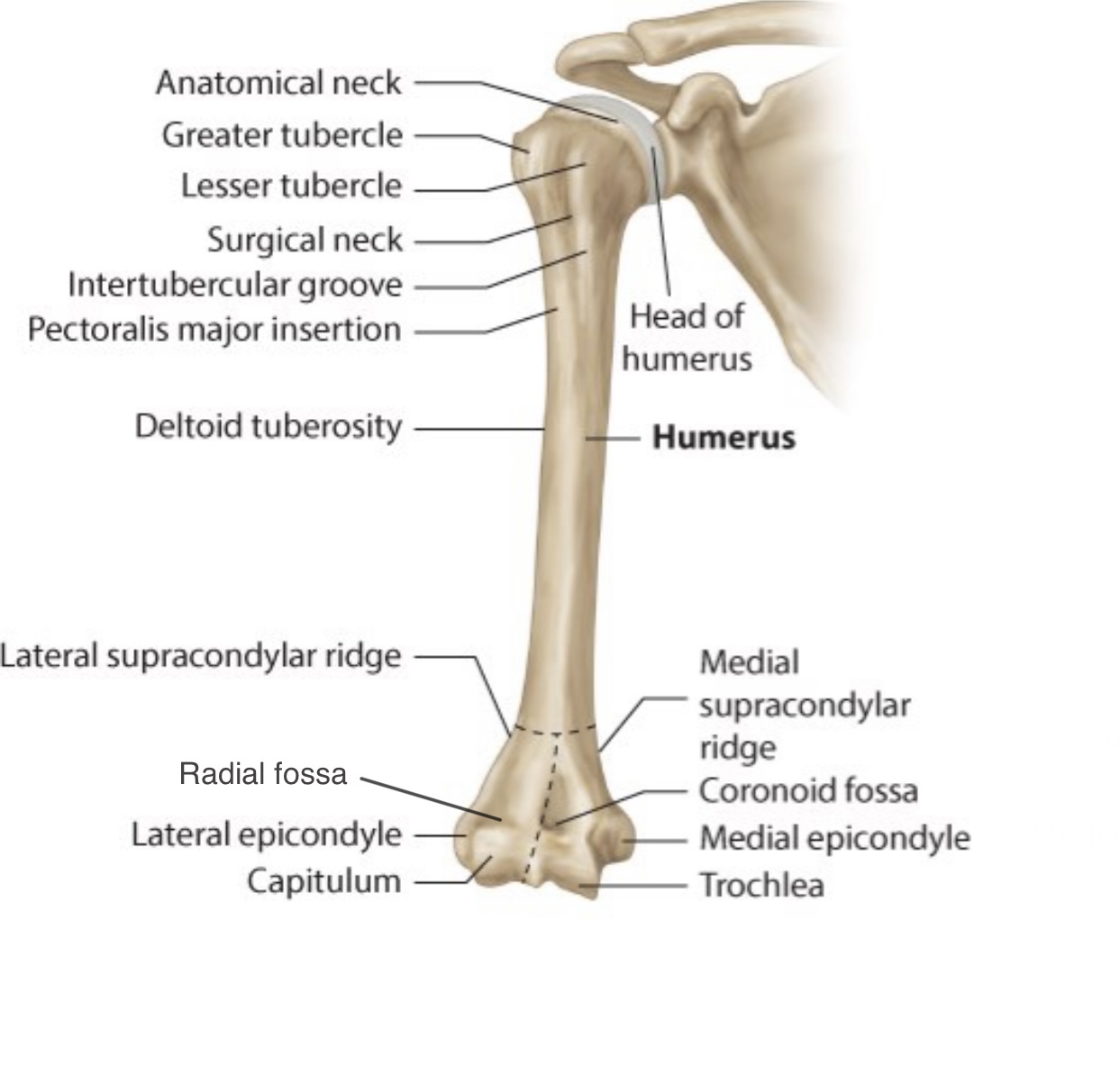

Understanding the human skeleton is a fundamental aspect of anatomy, and one of the key bones to focus on is the humerus. The humerus is the long bone in the arm that runs from the shoulder to the elbow. Labeling the humerus bone accurately is crucial for medical professionals, students, and anyone interested in human anatomy. This guide will walk you through the process of identifying and labeling the humerus bone, its parts, and its significance.
Understanding the Humerus Bone
The humerus is the longest bone in the arm and plays a critical role in the movement and stability of the shoulder and elbow joints. It is part of the upper limb and is essential for various daily activities, from lifting objects to throwing a ball. The humerus is divided into several distinct regions, each with its own unique features and functions.
Anatomy of the Humerus Bone
To effectively label the humerus bone, it is essential to understand its anatomy. The humerus can be divided into three main parts: the proximal end, the shaft, and the distal end.
Proximal End
The proximal end of the humerus is the upper part of the bone, which articulates with the scapula to form the shoulder joint. Key features of the proximal end include:
- Head of the Humerus: A rounded structure that fits into the glenoid cavity of the scapula.
- Anatomical Neck: A constricted area just below the head.
- Greater Tubercle: A large, rounded prominence on the lateral side.
- Lesser Tubercle: A smaller prominence on the medial side.
- Intertubercular Groove: A groove between the greater and lesser tubercles.
Shaft
The shaft, or body, of the humerus is the long, cylindrical portion of the bone. It is relatively straight and provides the structural support for the arm. Key features of the shaft include:
- Deltoid Tuberosity: A rough, triangular area on the lateral side where the deltoid muscle attaches.
- Radial Groove: A shallow groove on the lateral side where the radial nerve passes.
Distal End
The distal end of the humerus is the lower part of the bone, which articulates with the radius and ulna to form the elbow joint. Key features of the distal end include:
- Capitulum: A rounded structure that articulates with the head of the radius.
- Trochlea: A pulley-shaped structure that articulates with the ulna.
- Medial Epicondyle: A prominence on the medial side where the ulnar collateral ligament attaches.
- Lateral Epicondyle: A prominence on the lateral side where the radial collateral ligament attaches.
- Olecranon Fossa: A depression on the posterior side where the olecranon process of the ulna fits during extension.
- Coronoid Fossa: A depression on the anterior side where the coronoid process of the ulna fits during flexion.
Label The Humerus Bone: A Step-by-Step Guide
Labeling the humerus bone accurately involves identifying and marking each of its key features. Here is a step-by-step guide to help you label the humerus bone effectively:
Step 1: Identify the Proximal End
Begin by identifying the proximal end of the humerus. Look for the rounded head of the humerus, which articulates with the scapula. Next, locate the anatomical neck, greater tubercle, lesser tubercle, and intertubercular groove.
Step 2: Examine the Shaft
Move down to the shaft of the humerus. Identify the deltoid tuberosity and the radial groove. These features are crucial for understanding the muscle attachments and nerve pathways in the arm.
Step 3: Label the Distal End
Finally, examine the distal end of the humerus. Identify the capitulum, trochlea, medial epicondyle, lateral epicondyle, olecranon fossa, and coronoid fossa. These features are essential for understanding the elbow joint and its movements.
📝 Note: Use a diagram or a 3D model of the humerus to help visualize and label the bone accurately. This will enhance your understanding and ensure that you label each feature correctly.
Significance of the Humerus Bone
The humerus plays a vital role in the structure and function of the upper limb. Its unique anatomy allows for a wide range of movements, including flexion, extension, abduction, adduction, and rotation. The humerus is also a common site for fractures, particularly in the proximal and distal ends. Understanding the anatomy of the humerus is crucial for diagnosing and treating these injuries effectively.
Common Injuries and Conditions
The humerus is susceptible to various injuries and conditions due to its prominent role in the upper limb. Some of the most common issues include:
Fractures
Fractures of the humerus can occur in any of its regions, but they are most common in the proximal and distal ends. These fractures can be caused by trauma, such as falls or direct blows, and may require surgical intervention for proper healing.
Dislocations
Dislocations of the humerus typically occur at the shoulder joint, where the head of the humerus dislocates from the glenoid cavity of the scapula. This can be a painful and disabling injury that requires immediate medical attention.
Osteoarthritis
Osteoarthritis is a degenerative joint disease that can affect the shoulder and elbow joints, involving the humerus. This condition causes the cartilage in the joints to wear down, leading to pain, stiffness, and reduced range of motion.
Tendonitis
Tendonitis is an inflammation of the tendons that attach to the humerus. This condition can cause pain and swelling in the shoulder or elbow and is often associated with overuse or repetitive motions.
Diagnostic Imaging
Diagnostic imaging plays a crucial role in the evaluation and management of humerus injuries and conditions. Common imaging techniques include:
X-Rays
X-rays are the primary imaging modality for evaluating fractures and dislocations of the humerus. They provide clear images of the bone structure and can help identify the location and severity of the injury.
CT Scans
CT scans offer detailed cross-sectional images of the humerus and can be useful for evaluating complex fractures or assessing the extent of bone damage.
MRI Scans
MRI scans provide detailed images of the soft tissues surrounding the humerus, including muscles, tendons, and ligaments. This imaging technique is particularly useful for diagnosing tendonitis, ligament injuries, and other soft tissue conditions.
Treatment Options
The treatment of humerus injuries and conditions depends on the type and severity of the injury. Common treatment options include:
Conservative Management
Conservative management involves non-surgical treatments such as rest, ice, compression, and elevation (RICE), as well as physical therapy and pain medication. This approach is often used for minor injuries or conditions that do not require surgical intervention.
Surgical Intervention
Surgical intervention may be necessary for severe fractures, dislocations, or other conditions that do not respond to conservative management. Surgical options include open reduction and internal fixation (ORIF), arthroscopy, and joint replacement.
Rehabilitation
Rehabilitation is a crucial component of the recovery process for humerus injuries and conditions. Physical therapy and exercise programs can help restore strength, flexibility, and range of motion in the affected arm.
📝 Note: Always consult with a healthcare professional for an accurate diagnosis and appropriate treatment plan. Self-diagnosis and treatment can lead to complications and delayed healing.
Conclusion
Labeling the humerus bone accurately is essential for understanding its anatomy, function, and role in the upper limb. By identifying and labeling the key features of the humerus, you can gain a deeper appreciation for its significance in human anatomy and its susceptibility to various injuries and conditions. Whether you are a medical professional, student, or enthusiast, mastering the art of labeling the humerus bone will enhance your knowledge and skills in the field of anatomy.
Related Terms:
- draw and label the humerus
- labeled humerus anatomy
- humerus anatomy labeling quiz
- labeling parts of the humerus
- humerus anatomy labeled quiz
- bones of the humerus labeled