
Understanding the legs of a triangle is fundamental in geometry, as it forms the basis for various geometric principles and theorems. The legs of a triangle are the two sides that form a right angle in a right-angled triangle. These sides are crucial for calculating the length of the hypotenuse using the Pythagorean theorem, which states that in a right-angled triangle, the square of the length of the hypotenuse (c) is equal to the sum of the squares of the lengths of the other two sides (a and b). This relationship is expressed as c² = a² + b².
Understanding the Basics of Triangles
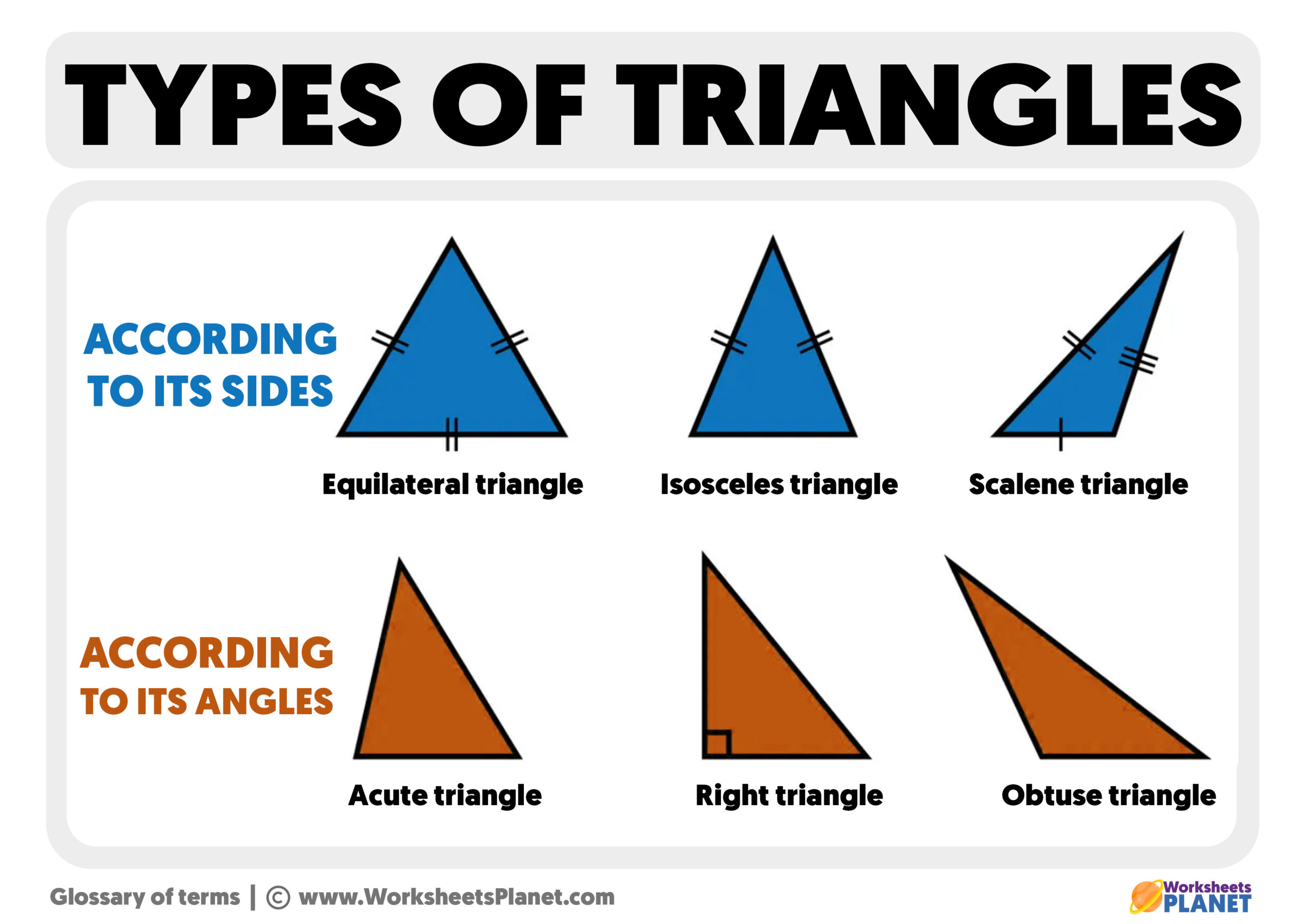
Before diving into the specifics of the legs of a triangle, it's essential to understand the basic types of triangles. Triangles can be classified based on their angles and sides:
- Right-Angled Triangle: A triangle with one angle measuring 90 degrees. The two sides forming the right angle are called the legs, and the side opposite the right angle is the hypotenuse.
- Acute-Angled Triangle: A triangle where all angles are less than 90 degrees.
- Obtuse-Angled Triangle: A triangle with one angle greater than 90 degrees.
- Equilateral Triangle: A triangle with all three sides of equal length.
- Isosceles Triangle: A triangle with two sides of equal length.
- Scalene Triangle: A triangle with all sides of different lengths.
The Importance of the Legs of a Triangle
The legs of a triangle play a crucial role in various geometric calculations and applications. Here are some key points highlighting their importance:
- Pythagorean Theorem: As mentioned earlier, the Pythagorean theorem is a fundamental concept that relies on the lengths of the legs of a right-angled triangle. This theorem is widely used in mathematics, physics, and engineering.
- Area Calculation: The area of a right-angled triangle can be calculated using the formula Area = (1/2) * base * height. In this context, the base and height are often the legs of the triangle.
- Trigonometric Ratios: The legs of a right-angled triangle are used to define trigonometric ratios such as sine, cosine, and tangent. For example, sine of an angle is the ratio of the opposite side to the hypotenuse, cosine is the ratio of the adjacent side to the hypotenuse, and tangent is the ratio of the opposite side to the adjacent side.
Calculating the Lengths of the Legs
In many geometric problems, you may need to calculate the lengths of the legs of a triangle. Here are some methods to do so:
Using the Pythagorean Theorem
If you know the length of the hypotenuse (c) and one of the legs (a or b), you can find the length of the other leg using the Pythagorean theorem. For example, if you know c and a, you can solve for b as follows:
b = √(c² - a²)
Using Trigonometric Ratios
If you know one leg and an angle, you can use trigonometric ratios to find the length of the other leg. For example, if you know the length of one leg (a) and the angle opposite the other leg (θ), you can find the length of the other leg (b) using the tangent ratio:
tan(θ) = opposite/adjacent
b = a * tan(θ)
Applications of the Legs of a Triangle
The legs of a triangle have numerous applications in various fields. Here are a few examples:
Architecture and Engineering
In architecture and engineering, triangles are often used for their stability and strength. The legs of a triangle are crucial in designing structures such as bridges, roofs, and trusses. Engineers use the properties of triangles to ensure that these structures can withstand various forces and loads.
Navigation and Surveying
In navigation and surveying, triangles are used to determine distances and directions. The legs of a triangle can help in calculating the distance between two points using trigonometric principles. This is particularly useful in land surveying, where accurate measurements are essential.
Computer Graphics and Animation
In computer graphics and animation, triangles are used to model three-dimensional objects. The legs of a triangle are essential in calculating the positions and orientations of these objects. This is crucial for creating realistic and immersive visual experiences.
Special Triangles and Their Legs
Some triangles have special properties that make them unique. Understanding these special triangles and their legs can simplify many geometric calculations.
45-45-90 Triangle
A 45-45-90 triangle is a right-angled triangle with angles of 45, 45, and 90 degrees. The legs of this triangle are equal in length, and the hypotenuse is √2 times the length of each leg. This triangle is often used in geometric proofs and constructions.
30-60-90 Triangle
A 30-60-90 triangle is a right-angled triangle with angles of 30, 60, and 90 degrees. The legs of this triangle have a specific ratio: the shorter leg is half the length of the hypotenuse, and the longer leg is √3 times the length of the shorter leg. This triangle is useful in various geometric and trigonometric calculations.
💡 Note: The ratios of the sides in a 30-60-90 triangle are 1:√3:2, where 1 is the shorter leg, √3 is the longer leg, and 2 is the hypotenuse.
Practical Examples
Let's consider a few practical examples to illustrate the use of the legs of a triangle in real-world scenarios.
Example 1: Calculating the Height of a Building
Suppose you want to calculate the height of a building using a right-angled triangle. You can stand a certain distance away from the building and measure the angle of elevation to the top of the building. Using trigonometric ratios, you can find the height of the building. For example, if you stand 50 meters away from the building and the angle of elevation is 30 degrees, you can use the tangent ratio to find the height (h):
tan(30°) = h / 50
h = 50 * tan(30°)
h ≈ 28.87 meters
Example 2: Designing a Roof Truss
In designing a roof truss, engineers often use right-angled triangles to ensure stability and strength. The legs of the triangle represent the rafters and the ceiling joists. By calculating the lengths of the legs, engineers can determine the appropriate dimensions for the truss. For example, if the rafters are 6 meters long and the ceiling joists are 4 meters long, the hypotenuse (which represents the length of the truss) can be calculated using the Pythagorean theorem:
c = √(6² + 4²)
c = √(36 + 16)
c = √52
c ≈ 7.21 meters
Common Mistakes to Avoid
When working with the legs of a triangle, it's essential to avoid common mistakes that can lead to incorrect calculations. Here are a few tips to keep in mind:
- Ensure Accuracy in Measurements: Always double-check your measurements to ensure accuracy. Small errors can lead to significant discrepancies in your calculations.
- Use the Correct Formula: Make sure you are using the correct formula for the type of triangle you are working with. For example, use the Pythagorean theorem for right-angled triangles and trigonometric ratios for other types of triangles.
- Check Your Units: Ensure that all measurements are in the same units. Mixing units can lead to incorrect calculations.
💡 Note: Always verify your calculations by checking them against known values or using a different method to ensure accuracy.
In conclusion, the legs of a triangle are fundamental components in geometry, with wide-ranging applications in various fields. Understanding their properties and how to calculate their lengths is essential for solving geometric problems and designing structures. Whether you are a student, engineer, or enthusiast, mastering the concepts related to the legs of a triangle will enhance your problem-solving skills and deepen your understanding of geometry.
Related Terms:
- triangle leg rule calculator
- legs of a triangle calculator
- pythagorean theorem for right triangles
- calculate legs of a triangle
- right triangle legs and hypotenuse
- right triangle leg calculator