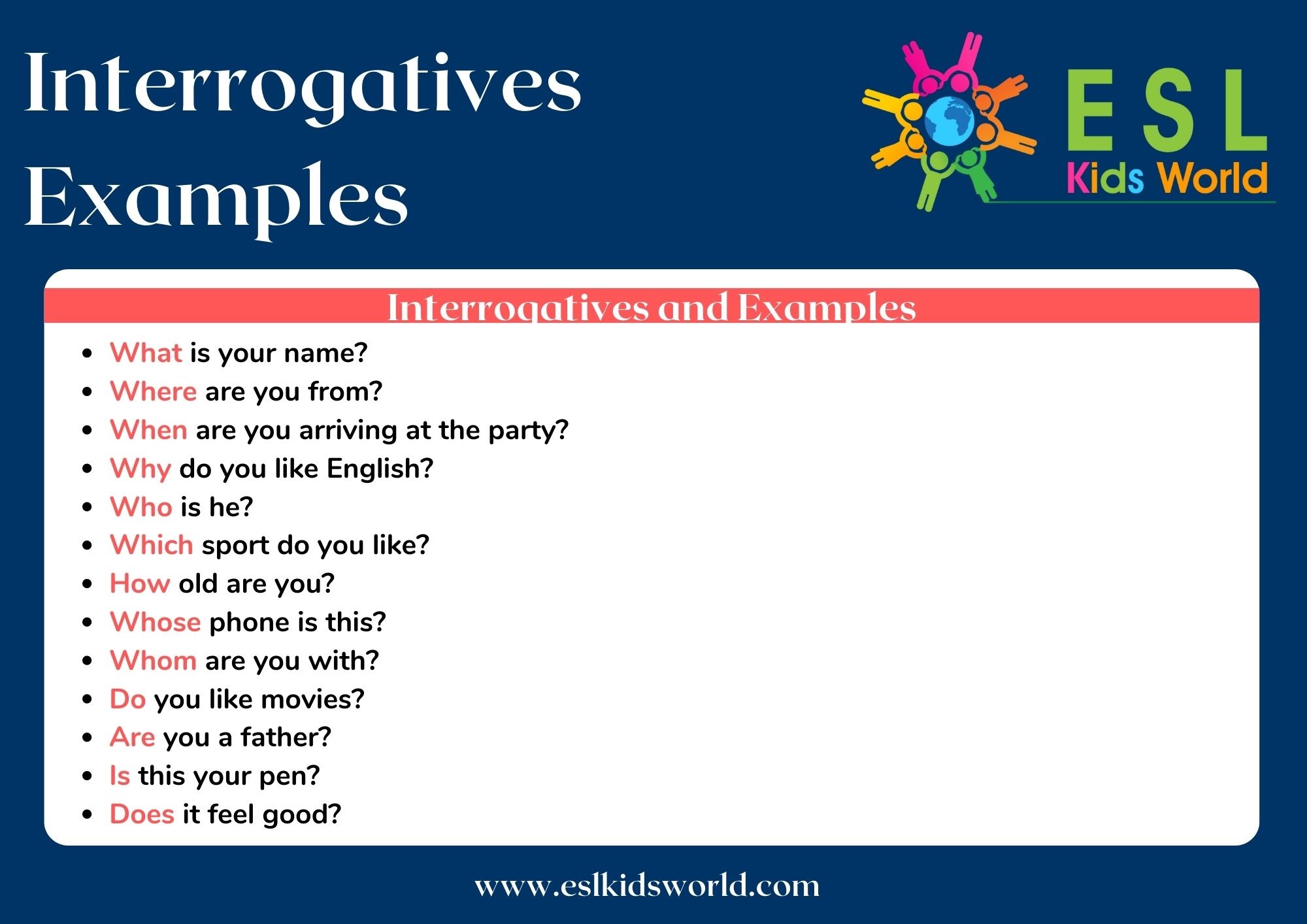

Understanding the nuances of language is a fascinating journey, and one of the most intriguing aspects is the sentence with interrogative. These sentences are not just about asking questions; they are about seeking information, clarifying doubts, and engaging in meaningful conversations. Whether you are a language enthusiast, a student, or someone looking to improve your communication skills, grasping the intricacies of interrogative sentences can significantly enhance your linguistic prowess.
What is a Sentence With Interrogative?
A sentence with interrogative is a type of sentence that asks a question. It is designed to elicit a response from the listener or reader. Interrogative sentences typically begin with a question word such as who, what, where, when, why, or how. These words help to frame the question and guide the type of information being sought.
Types of Interrogative Sentences
Interrogative sentences can be categorized into several types based on their structure and purpose. Understanding these types can help you construct more effective questions and improve your communication skills.
Yes/No Questions
Yes/No questions are the simplest form of interrogative sentences. They can be answered with a simple "yes" or "no." These questions often start with a verb or an auxiliary verb.
- Are you going to the party tonight?
- Do you like chocolate?
- Is it raining outside?
Wh-Questions
Wh-questions are more complex and are used to seek specific information. They begin with a question word (who, what, where, when, why, how) and are followed by a verb and the subject.
- Who is coming to the meeting?
- What time does the movie start?
- Where did you go on vacation?
- When will the project be completed?
- Why did you choose this career?
- How do you solve this problem?
Tag Questions
Tag questions are statements followed by a short question. They are used to confirm information or seek agreement. The tag question is usually a shortened version of the main clause.
- You are coming to the party, aren't you?
- She likes coffee, doesn't she?
- They will arrive soon, won't they?
Constructing Effective Interrogative Sentences
Creating effective interrogative sentences involves more than just knowing the structure. It requires an understanding of context, tone, and the intended audience. Here are some tips to help you construct effective interrogative sentences:
Clarity and Precision
Ensure that your questions are clear and precise. Avoid ambiguity and make sure the question word aligns with the information you are seeking.
For example, instead of asking, "What do you think about the project?" you might ask, "What specific aspects of the project do you think need improvement?"
Contextual Relevance
Consider the context in which you are asking the question. The same question can have different meanings in different contexts. Make sure your question is relevant to the situation and the audience.
For example, asking "What time is it?" in a casual conversation is different from asking it in a formal meeting. The context can change the tone and the expected response.
Tone and Politeness
The tone of your question can significantly impact the response you receive. Use a polite and respectful tone, especially when asking questions in formal or professional settings.
For example, instead of saying, "Why are you late?" you might say, "I noticed you arrived a bit late. Is everything okay?"
Common Mistakes to Avoid
Even experienced speakers can make mistakes when constructing interrogative sentences. Here are some common pitfalls to avoid:
Incorrect Word Order
One of the most common mistakes is incorrect word order. Ensure that the question word is followed by the verb and then the subject.
For example, instead of saying, "Where you are going?" say, "Where are you going?"
Ambiguous Questions
Ambiguous questions can lead to confusion and misinterpretation. Make sure your questions are specific and clear.
For example, instead of asking, "What do you want?" say, "What specific item do you want from the store?"
Overuse of Tag Questions
While tag questions can be useful, overusing them can make your speech sound uncertain or hesitant. Use them sparingly and only when appropriate.
For example, instead of saying, "You are coming to the party, aren't you?" repeatedly, use it only when seeking confirmation.
Practical Examples
Let's look at some practical examples of interrogative sentences in different contexts to understand their usage better.
Casual Conversation
In casual conversations, interrogative sentences are often used to maintain a flow of dialogue and show interest in the other person.
- What did you do over the weekend?
- How was your day at work?
- Where are you planning to go for vacation?
Formal Settings
In formal settings, interrogative sentences are used to gather information, clarify doubts, and make decisions. They are often more structured and precise.
- What are the key objectives of this project?
- How can we improve our customer service?
- When will the report be submitted?
Academic Contexts
In academic contexts, interrogative sentences are used to explore ideas, seek explanations, and deepen understanding. They are often more complex and require critical thinking.
- What are the main causes of climate change?
- How does photosynthesis work in plants?
- Why is it important to study history?
Interrogative Sentences in Different Languages
Interrogative sentences vary across languages, but the fundamental principles remain the same. Understanding how different languages construct questions can enhance your linguistic skills and cultural awareness.
English
In English, interrogative sentences typically follow a subject-verb-object structure, with the question word at the beginning.
- Who is coming to the party?
- What time does the movie start?
- Where did you go on vacation?
Spanish
In Spanish, interrogative sentences often use inverted word order, with the verb preceding the subject. Question words are also used to frame the question.
- ¿Quién viene a la fiesta?
- ¿A qué hora empieza la película?
- ¿A dónde fuiste de vacaciones?
French
In French, interrogative sentences can use either inverted word order or a question word at the beginning. The verb often precedes the subject in inverted questions.
- Qui vient à la fête?
- À quelle heure commence le film?
- Où es-tu allé en vacances?
German
In German, interrogative sentences use a similar structure to English, with the question word at the beginning and the verb following the subject.
- Wer kommt zur Party?
- Wann beginnt der Film?
- Wo warst du im Urlaub?
Interrogative Sentences in Literature
Interrogative sentences play a crucial role in literature, adding depth and complexity to characters and narratives. Authors use questions to reveal character motivations, advance the plot, and engage readers.
Examples from Classic Literature
Let's explore some examples of interrogative sentences from classic literature to understand their impact.
In "Pride and Prejudice" by Jane Austen, Elizabeth Bennet's questions often reveal her wit and intelligence.
"What are you thinking of?" said Mr. Darcy, turning towards her.
In "To Kill a Mockingbird" by Harper Lee, Atticus Finch's questions are used to teach his children valuable lessons about empathy and justice.
"Do you really think so?" asked Jem.
"I do," said Atticus. "I do."
In "The Great Gatsby" by F. Scott Fitzgerald, Gatsby's questions often reflect his longing and obsession with the past.
"Can't repeat the past?" he cried incredulously. "Why of course you can!"
Interrogative Sentences in Everyday Life
Interrogative sentences are an essential part of everyday communication. They help us navigate social interactions, gather information, and make decisions. Understanding how to use them effectively can enhance your communication skills and improve your relationships.
In Social Interactions
In social interactions, interrogative sentences are used to show interest, seek information, and maintain a conversation. They can be casual or formal, depending on the context.
- What are your plans for the weekend?
- How was your day?
- Where are you going for dinner?
In Professional Settings
In professional settings, interrogative sentences are used to gather information, clarify doubts, and make decisions. They are often more structured and precise.
- What are the key objectives of this project?
- How can we improve our customer service?
- When will the report be submitted?
In Educational Contexts
In educational contexts, interrogative sentences are used to explore ideas, seek explanations, and deepen understanding. They are often more complex and require critical thinking.
- What are the main causes of climate change?
- How does photosynthesis work in plants?
- Why is it important to study history?
📝 Note: Interrogative sentences are not just about asking questions; they are about seeking information, clarifying doubts, and engaging in meaningful conversations. Whether you are a language enthusiast, a student, or someone looking to improve your communication skills, grasping the intricacies of interrogative sentences can significantly enhance your linguistic prowess.
Interrogative sentences are a fundamental aspect of language that plays a crucial role in communication. Understanding their structure, types, and usage can enhance your linguistic skills and improve your ability to engage in meaningful conversations. Whether you are asking a simple yes/no question or seeking specific information with a wh-question, mastering the art of constructing effective interrogative sentences can significantly enhance your communication skills. By avoiding common mistakes and using interrogative sentences appropriately in different contexts, you can become a more effective communicator and deepen your understanding of language.
Related Terms:
- 3 interrogative sentences
- 5 interrogative sentences
- give me a interrogative sentence
- sample of interrogative sentence
- what does interrogative mean sentence
- interrogative sentence example with answer