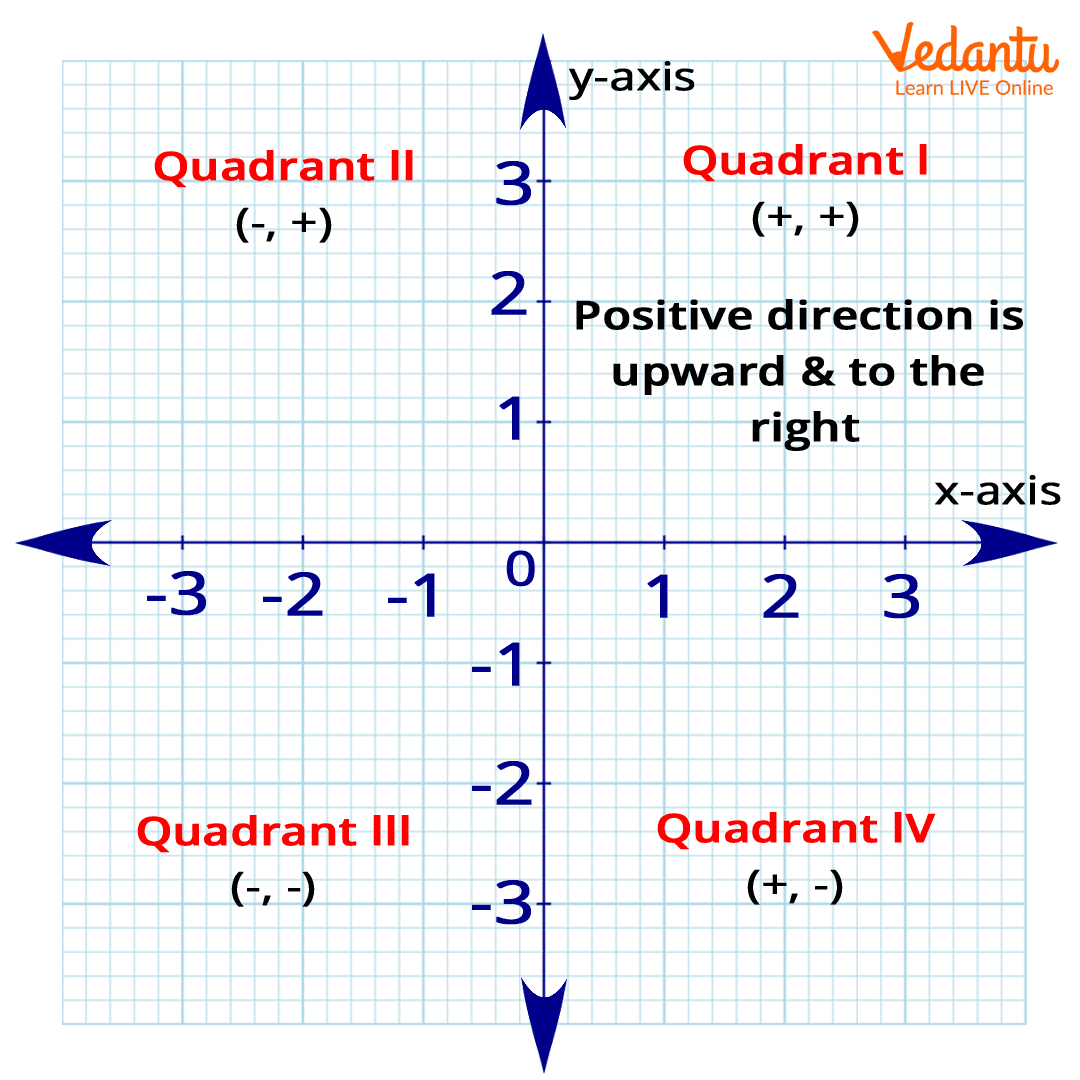

Understanding the concept of coordinates is fundamental in various fields, from mathematics and geography to computer graphics and navigation. What are coordinates? Simply put, coordinates are a set of values that define the position of a point in a space. They serve as a reference system that allows us to pinpoint locations with precision. This blog post will delve into the intricacies of coordinates, their types, applications, and how they are used in different contexts.
Understanding Coordinates
Coordinates are essential for locating points in a multi-dimensional space. In a two-dimensional plane, coordinates are typically represented by an ordered pair (x, y), where 'x' denotes the horizontal position and 'y' denotes the vertical position. In a three-dimensional space, a third coordinate 'z' is added to represent depth. This system can be extended to higher dimensions as needed.
To grasp the concept of coordinates, it's helpful to visualize a simple grid. Imagine a graph with horizontal and vertical lines intersecting at right angles. The point where these lines meet is called the origin, and it serves as the reference point (0, 0). Any other point on the grid can be identified by its coordinates, which indicate how far it is from the origin along the x-axis and y-axis.
Types of Coordinate Systems
There are several types of coordinate systems, each suited to different applications. The most common ones include:
- Cartesian Coordinates: This is the most familiar system, using perpendicular axes to define positions. It is widely used in mathematics and physics.
- Polar Coordinates: In this system, a point is defined by its distance from a reference point (the origin) and an angle from a reference direction. It is useful in fields like astronomy and engineering.
- Geographic Coordinates: These are used to specify locations on the Earth's surface. They include latitude and longitude, which are angular measurements from the Earth's center.
- Cylindrical and Spherical Coordinates: These are extensions of polar coordinates to three dimensions, useful in physics and engineering for describing positions in cylindrical or spherical shapes.
Applications of Coordinates
Coordinates have a wide range of applications across various disciplines. Here are some key areas where coordinates play a crucial role:
- Navigation: GPS systems use geographic coordinates to determine the exact location of a device. This technology is integral to modern navigation, from personal devices to commercial shipping and aviation.
- Mapping: Geographic Information Systems (GIS) rely on coordinates to create detailed maps. These maps are used in urban planning, environmental studies, and disaster management.
- Computer Graphics: In digital art and gaming, coordinates are used to position objects in a virtual space. This allows for the creation of immersive and interactive environments.
- Robotics: Robots use coordinates to navigate their environment and perform tasks. Precision in coordinate systems is crucial for tasks like assembly, welding, and material handling.
- Astronomy: Astronomers use coordinates to map the positions of stars and planets. This helps in understanding celestial movements and predicting astronomical events.
Coordinate Systems in Detail
Let's explore some of the coordinate systems in more detail to understand their specific uses and advantages.
Cartesian Coordinates
Cartesian coordinates are named after the French mathematician René Descartes. In a two-dimensional plane, a point is represented as (x, y), where 'x' is the horizontal distance from the origin and 'y' is the vertical distance. In three dimensions, a point is represented as (x, y, z), with 'z' indicating the depth.
Cartesian coordinates are straightforward and intuitive, making them ideal for many mathematical and scientific applications. They are used in:
- Graphing functions and equations
- Describing the motion of objects in physics
- Computer graphics and animation
Polar Coordinates
Polar coordinates are particularly useful for describing points in a circular or spherical context. A point is defined by its radius 'r' (distance from the origin) and angle 'θ' (measured from a reference direction, usually the positive x-axis).
Polar coordinates are advantageous in situations where the shape of the object or the nature of the problem is more naturally described in terms of distance and angle. They are used in:
- Describing the orbits of planets and satellites
- Analyzing wave patterns and sound propagation
- Engineering applications involving circular or rotational motion
Geographic Coordinates
Geographic coordinates are essential for locating points on the Earth's surface. They consist of latitude and longitude, which are angular measurements. Latitude measures the north-south position relative to the Equator, while longitude measures the east-west position relative to the Prime Meridian.
Geographic coordinates are crucial for:
- Navigation and mapping
- Geographic Information Systems (GIS)
- Environmental and climate studies
Cylindrical and Spherical Coordinates
Cylindrical and spherical coordinates extend the concept of polar coordinates to three dimensions. In cylindrical coordinates, a point is defined by its radius 'r', angle 'θ', and height 'z'. In spherical coordinates, a point is defined by its radius 'ρ', polar angle 'θ', and azimuthal angle 'φ'.
These coordinate systems are particularly useful in:
- Physics and engineering for describing three-dimensional shapes and motions
- Astronomy for modeling celestial bodies and their movements
- Computer graphics for rendering complex 3D objects
Converting Between Coordinate Systems
Often, it is necessary to convert between different coordinate systems to suit the requirements of a particular application. Here are some common conversions:
Cartesian to Polar
To convert from Cartesian coordinates (x, y) to polar coordinates (r, θ), use the following formulas:
| Polar Coordinate | Formula |
|---|---|
| r | √(x² + y²) |
| θ | tan⁻¹(y/x) |
Note that the formula for θ needs to account for the quadrant in which the point lies to ensure the correct angle.
Polar to Cartesian
To convert from polar coordinates (r, θ) to Cartesian coordinates (x, y), use the following formulas:
| Cartesian Coordinate | Formula |
|---|---|
| x | r * cos(θ) |
| y | r * sin(θ) |
Geographic to Cartesian
Converting geographic coordinates (latitude, longitude) to Cartesian coordinates involves more complex trigonometric calculations. The formulas depend on the specific model of the Earth used (e.g., WGS84).
📝 Note: Converting between geographic and Cartesian coordinates often requires specialized software or libraries due to the complexity of the calculations.
Challenges and Considerations
While coordinates are a powerful tool, there are several challenges and considerations to keep in mind:
- Accuracy: The precision of coordinates is crucial in applications like navigation and mapping. Small errors can lead to significant discrepancies in position.
- Coordinate Systems Compatibility: Different applications may use different coordinate systems, requiring conversions that can introduce errors.
- Data Integration: Integrating data from various sources that use different coordinate systems can be complex and time-consuming.
- Dynamic Environments: In dynamic environments, such as robotics or real-time navigation, coordinates need to be updated continuously to reflect changes in position.
Addressing these challenges often involves using advanced algorithms, high-precision instruments, and robust data management systems.
In conclusion, coordinates are a fundamental concept that underpins many fields of study and application. From simple two-dimensional graphs to complex three-dimensional models, coordinates provide a systematic way to define and locate points in space. Understanding the different types of coordinate systems and their applications is essential for anyone working in mathematics, science, engineering, or technology. Whether you are navigating a city, mapping a landscape, or designing a virtual world, a solid grasp of coordinates is indispensable.
Related Terms:
- what are coordinates for kids
- what are co coordinates
- define coordinates
- what are coordinates used for
- what are coordinates in math
- example of coordinates