
Doping in sports has long been a contentious issue, sparking debates about fairness, ethics, and the integrity of athletic competitions. Understanding what is doping, its history, and its impact on sports is crucial for athletes, coaches, and fans alike. This post delves into the complexities of doping, exploring its definitions, types, detection methods, and the broader implications for the sporting world.
What Is Doping?
Doping refers to the use of prohibited substances or methods to enhance athletic performance. These substances can include anabolic steroids, hormones, stimulants, and other performance-enhancing drugs. The World Anti-Doping Agency (WADA) defines doping as the occurrence of one or more of the anti-doping rule violations set forth in the Code. These violations include the presence of a prohibited substance or its metabolites or markers in an athlete’s sample, the use or attempted use of a prohibited substance or method, and refusing or failing to submit to sample collection.
History of Doping in Sports
The history of doping in sports is as old as competitive athletics itself. Early instances of doping can be traced back to ancient civilizations, where athletes used various substances to gain an edge. However, it was in the modern era that doping became more systematic and widespread. The use of performance-enhancing drugs became particularly prevalent in the mid-20th century, with the rise of anabolic steroids in the 1950s and 1960s. The 1980s and 1990s saw a surge in doping scandals, leading to the establishment of anti-doping agencies and stricter regulations.
Types of Doping Substances
Doping substances can be categorized into several groups based on their effects and mechanisms. Some of the most common types include:
- Anabolic Steroids: These are synthetic versions of the male hormone testosterone. They promote muscle growth and strength.
- Hormones and Related Substances: These include human growth hormone (HGH), insulin, and erythropoietin (EPO), which enhance muscle development and endurance.
- Stimulants: These substances, such as amphetamines and cocaine, increase alertness and energy levels.
- Beta-Blockers: These drugs are used to reduce heart rate and control tremors, often used in sports requiring precision and stability.
- Diuretics and Masking Agents: These substances are used to mask the presence of other banned substances by increasing urine output.
Detection Methods
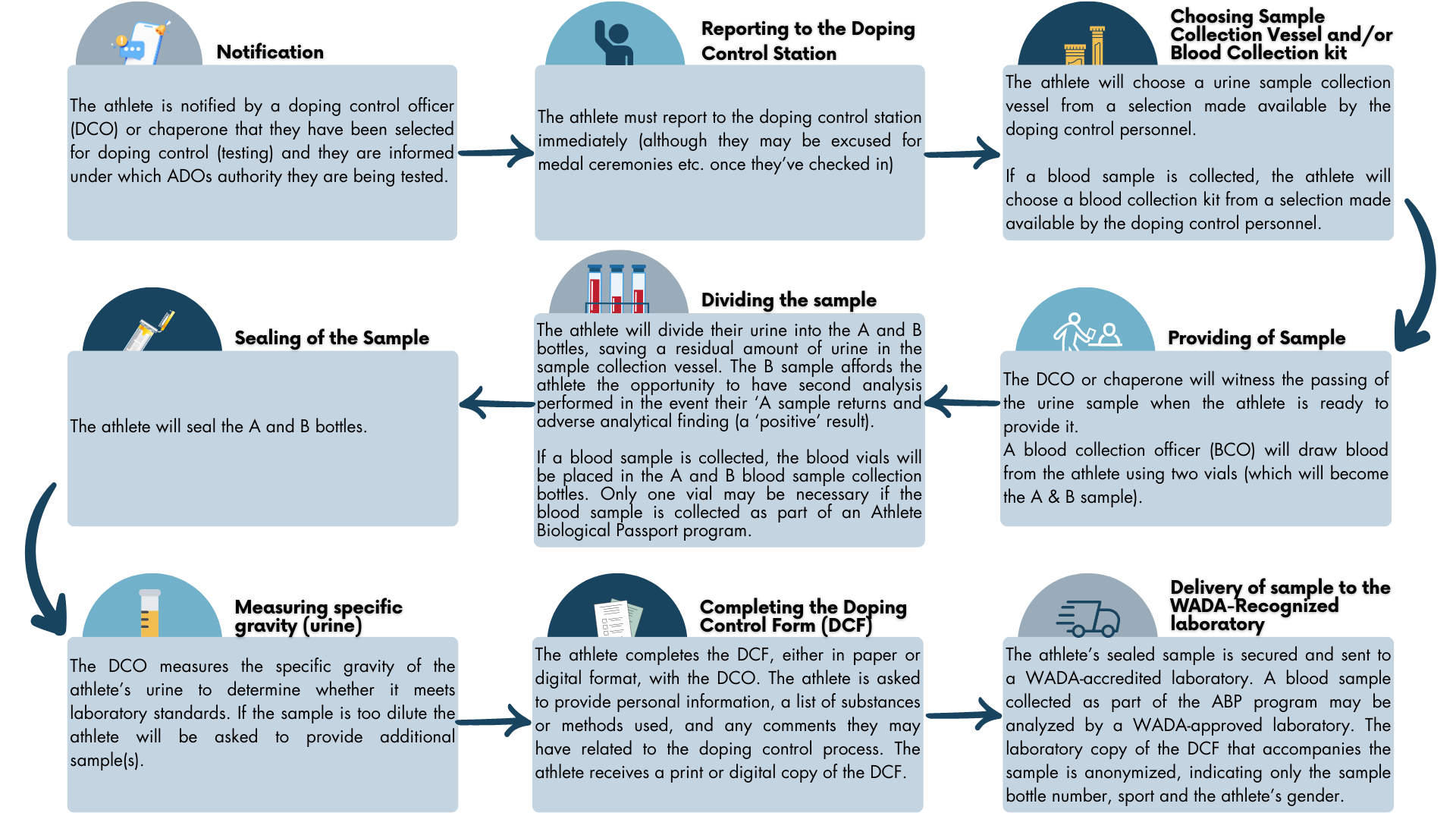
Detecting doping involves sophisticated methods and technologies. The primary methods include:
- Urinalysis: This is the most common method, where urine samples are tested for the presence of prohibited substances.
- Blood Testing: Blood samples are analyzed for biomarkers and substances that indicate doping.
- Hair Testing: This method can detect long-term use of banned substances by analyzing hair follicles.
- Biological Passport: This involves monitoring an athlete’s biological variables over time to detect anomalies that may indicate doping.
WADA maintains a list of prohibited substances and methods, which is updated regularly to keep pace with advancements in doping techniques. Athletes are required to undergo regular testing, both in and out of competition, to ensure compliance with anti-doping regulations.
Impact of Doping on Sports
The impact of doping on sports is multifaceted, affecting athletes, sports organizations, and fans. Some of the key impacts include:
- Fairness and Integrity: Doping undermines the principles of fair play and integrity, as athletes who dope gain an unfair advantage over clean competitors.
- Health Risks: The use of performance-enhancing drugs can have serious health consequences, including liver damage, heart problems, and psychological issues.
- Public Trust: Doping scandals erode public trust in sports and athletes, leading to decreased interest and support.
- Economic Consequences: Sports organizations and sponsors may face financial losses due to doping-related controversies.
To mitigate these impacts, sports organizations have implemented strict anti-doping policies and penalties for violators. Athletes caught doping face sanctions, including suspensions, fines, and the loss of medals and titles.
High-Profile Doping Cases
Several high-profile doping cases have made headlines over the years, highlighting the pervasive nature of the issue. Some notable examples include:
- Lance Armstrong: The cyclist was stripped of his seven Tour de France titles after admitting to using performance-enhancing drugs.
- Marion Jones: The track and field athlete was convicted of lying to federal investigators about her use of steroids.
- Ben Johnson: The Canadian sprinter was disqualified from the 1988 Olympic Games after testing positive for steroids.
- Russian Doping Scandal: A systematic doping program was uncovered in Russia, leading to the suspension of many athletes and the banning of the Russian team from international competitions.
These cases have served as stark reminders of the need for vigilant anti-doping measures and the consequences of cheating in sports.
Prevention and Education
Preventing doping requires a multi-faceted approach that includes education, strict regulations, and effective enforcement. Key strategies include:
- Education and Awareness: Educating athletes, coaches, and support personnel about the dangers of doping and the importance of clean sport.
- Strict Regulations: Implementing and enforcing strict anti-doping policies and penalties for violators.
- Effective Enforcement: Utilizing advanced detection methods and conducting regular testing to ensure compliance.
- Support for Clean Athletes: Providing resources and support for athletes who choose to compete cleanly.
Organizations like WADA play a crucial role in coordinating global anti-doping efforts and promoting clean sport. They work with sports organizations, governments, and other stakeholders to develop and implement effective anti-doping strategies.
📝 Note: The fight against doping is an ongoing battle that requires continuous vigilance and adaptation to new challenges.
Future of Doping in Sports
The future of doping in sports is uncertain, as new technologies and substances continue to emerge. However, advancements in detection methods and increased awareness are helping to combat the issue. The development of the biological passport and other innovative testing methods offers hope for more effective doping control. Additionally, the growing emphasis on education and support for clean athletes is fostering a culture of integrity and fair play.
As the sporting world continues to evolve, it is essential to remain proactive in addressing the challenges posed by doping. By working together, athletes, coaches, sports organizations, and anti-doping agencies can create a level playing field where everyone has an equal opportunity to succeed.
In conclusion, understanding what is doping, its history, types, detection methods, and impacts is crucial for maintaining the integrity of sports. The fight against doping requires a collective effort, involving education, strict regulations, and effective enforcement. By promoting clean sport and supporting athletes who choose to compete fairly, we can ensure that sports remain a celebration of human achievement and fair competition.
Related Terms:
- what is blood doping
- what is doping physics
- what is doping chemistry
- define doping
- what is doping definition
- explain doping