
In the realm of computing and technology, understanding the fundamentals of hardware components is crucial. One of the most essential components is the input device. What is an input device? An input device is any hardware component that allows users to interact with a computer or other electronic systems by sending data or commands. These devices are the bridge between the user and the machine, enabling communication and control. This blog post will delve into the various types of input devices, their functions, and their significance in modern technology.
Understanding Input Devices
Input devices come in a variety of forms, each designed to perform specific tasks. They can be categorized based on their functionality and the type of data they input into the system. Some of the most common input devices include keyboards, mice, scanners, and microphones. Each of these devices serves a unique purpose and enhances the user experience by providing different methods of interaction.
Types of Input Devices
Input devices can be broadly classified into several categories based on their functionality. Here are some of the most common types:
Mechanical Input Devices
Mechanical input devices are those that require physical movement to input data. These devices are often used for tasks that require precise control and accuracy. Examples include:
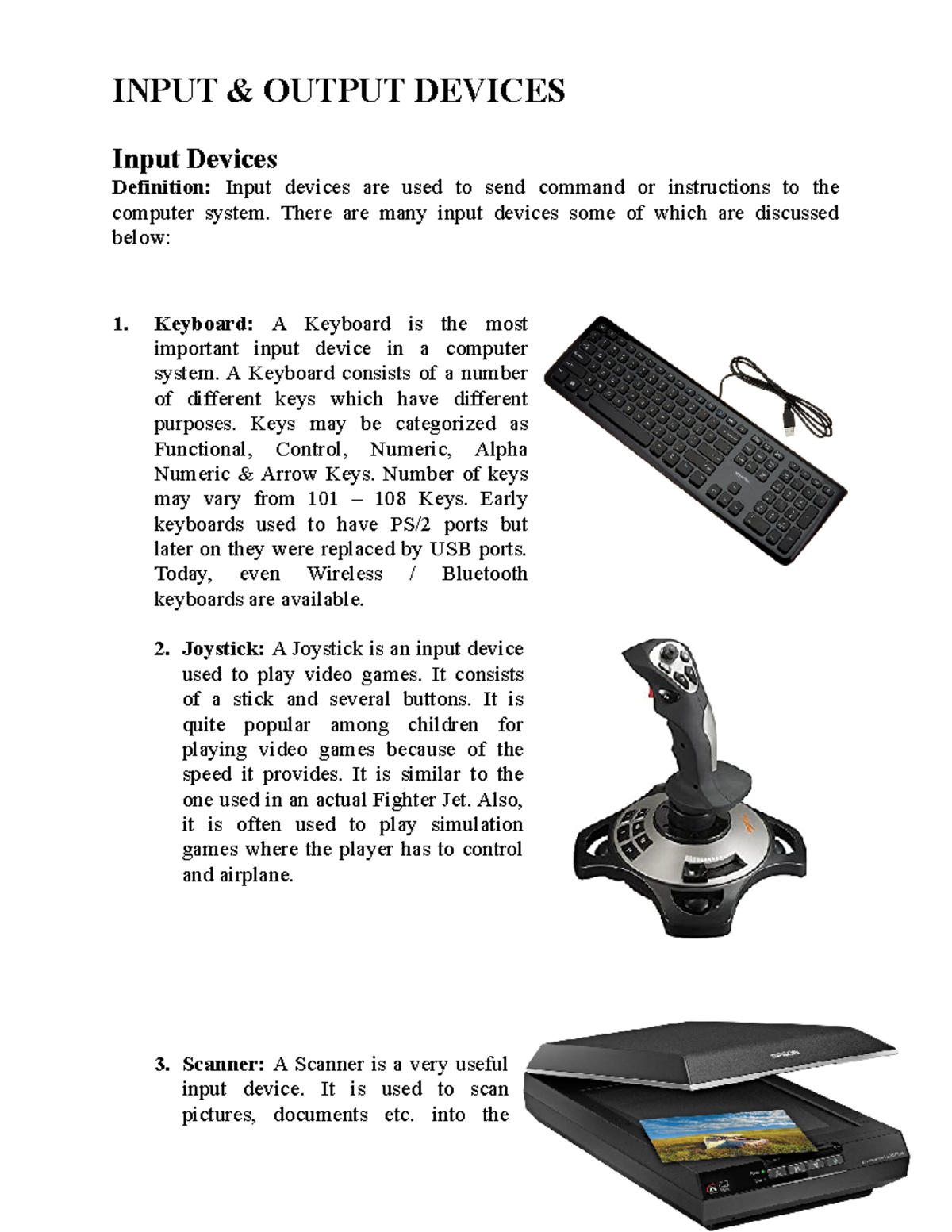
- Keyboards: The most common input device, used for typing text and entering commands.
- Mice: Used for navigating the graphical user interface (GUI) and selecting items on the screen.
- Joysticks: Often used in gaming and simulation applications for precise control.
Optical Input Devices
Optical input devices use light to capture and input data. These devices are commonly used for scanning documents and images. Examples include:
- Scanners: Used to convert physical documents into digital formats.
- Optical Mark Recognition (OMR) Devices: Used for reading marked data from forms and surveys.
Audio Input Devices
Audio input devices capture sound and convert it into digital data. These devices are essential for voice recognition, recording, and communication. Examples include:
- Microphones: Used for capturing audio input for voice commands, recording, and communication.
- Webcams with Built-in Microphones: Used for video conferencing and online meetings.
Biometric Input Devices
Biometric input devices use biological characteristics to authenticate users. These devices enhance security by ensuring that only authorized individuals can access the system. Examples include:
- Fingerprint Scanners: Used for biometric authentication in laptops and smartphones.
- Iris Scanners: Used for high-security applications requiring precise identification.
- Voice Recognition Systems: Used for voice-based authentication and control.
Motion-Sensing Input Devices
Motion-sensing input devices detect movement and translate it into digital commands. These devices are commonly used in gaming and virtual reality applications. Examples include:
- Motion Controllers: Used in gaming consoles for immersive gameplay.
- Accelerometers: Used in smartphones and wearable devices to detect movement and orientation.
Importance of Input Devices
Input devices play a critical role in the functionality and usability of computers and electronic systems. They enable users to interact with the system in a variety of ways, making technology more accessible and user-friendly. Here are some key points highlighting the importance of input devices:
- Enhanced User Experience: Input devices provide multiple methods of interaction, allowing users to choose the most convenient and efficient way to input data.
- Improved Productivity: Efficient input devices can significantly enhance productivity by reducing the time and effort required to complete tasks.
- Increased Accessibility: Input devices cater to users with different needs and abilities, making technology more inclusive.
- Enhanced Security: Biometric input devices provide an additional layer of security, ensuring that only authorized users can access the system.
Choosing the Right Input Device
Selecting the appropriate input device depends on the specific needs and requirements of the user. Here are some factors to consider when choosing an input device:
- Purpose: Determine the primary use of the input device. For example, a keyboard is essential for typing, while a mouse is crucial for navigation.
- Compatibility: Ensure that the input device is compatible with the operating system and other hardware components.
- Ergonomics: Choose an input device that is comfortable to use and reduces the risk of repetitive strain injuries.
- Durability: Opt for input devices that are built to last and can withstand regular use.
- Cost: Consider the budget and choose an input device that offers the best value for money.
Future Trends in Input Devices
The field of input devices is continually evolving, driven by advancements in technology and changing user needs. Some of the emerging trends in input devices include:
- Gesture Control: Devices that allow users to interact with the system using hand gestures, enhancing the immersive experience.
- Haptic Feedback: Input devices that provide tactile feedback, making interactions more intuitive and engaging.
- Augmented Reality (AR) and Virtual Reality (VR): Input devices designed for AR and VR applications, offering new ways to interact with digital content.
- Voice Recognition: Advanced voice recognition systems that enable hands-free interaction with devices.
💡 Note: The future of input devices is poised to revolutionize how we interact with technology, making it more intuitive, immersive, and accessible.
Conclusion
In summary, input devices are essential components of any computing system, enabling users to interact with and control electronic devices. From mechanical devices like keyboards and mice to advanced biometric and motion-sensing devices, the variety of input devices available today caters to diverse needs and preferences. Understanding what is an input device and its significance can help users make informed decisions when selecting the right tools for their tasks. As technology continues to evolve, input devices will play an even more crucial role in shaping the future of human-computer interaction.